


Orders

Profile


Wallet

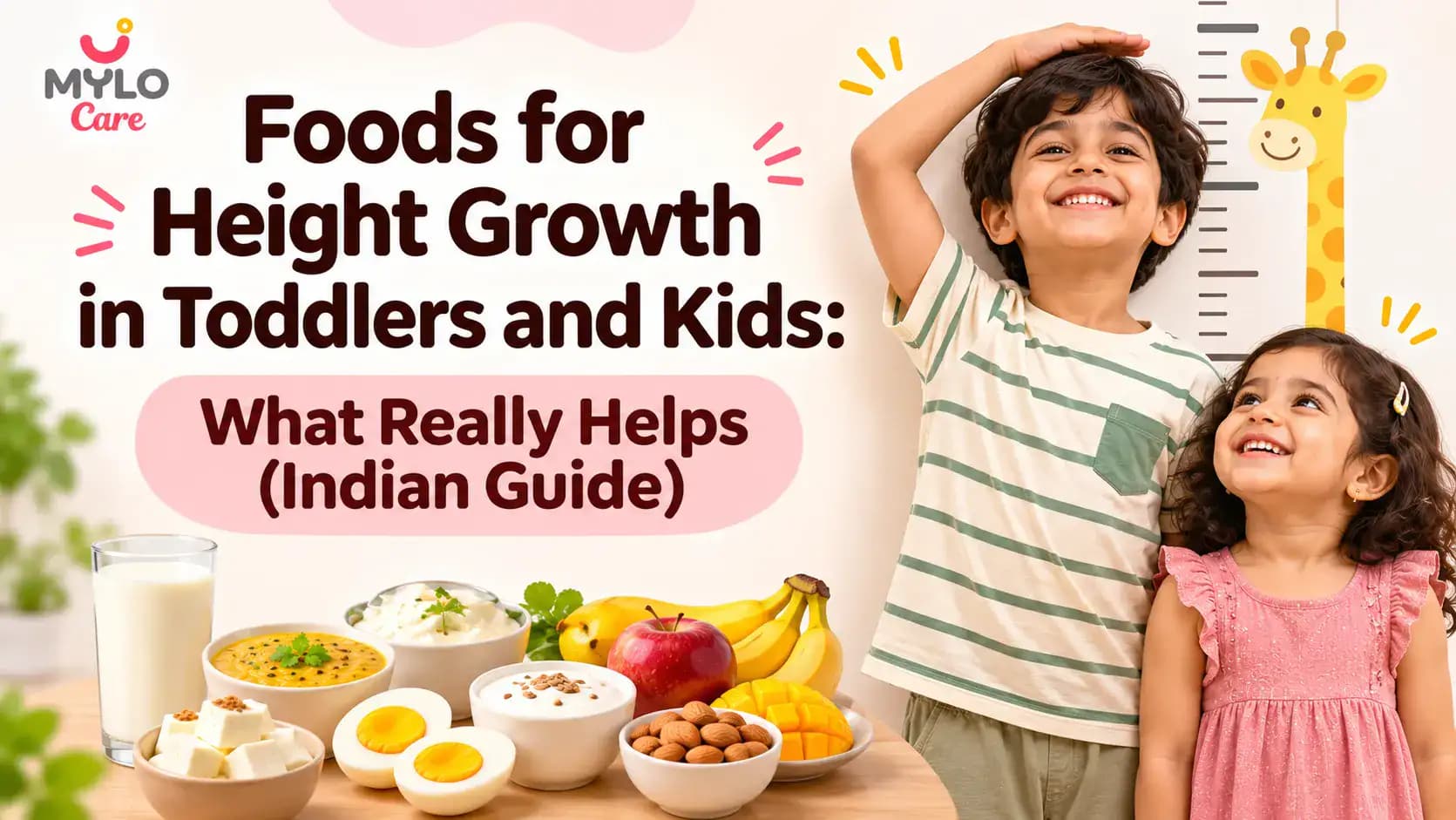
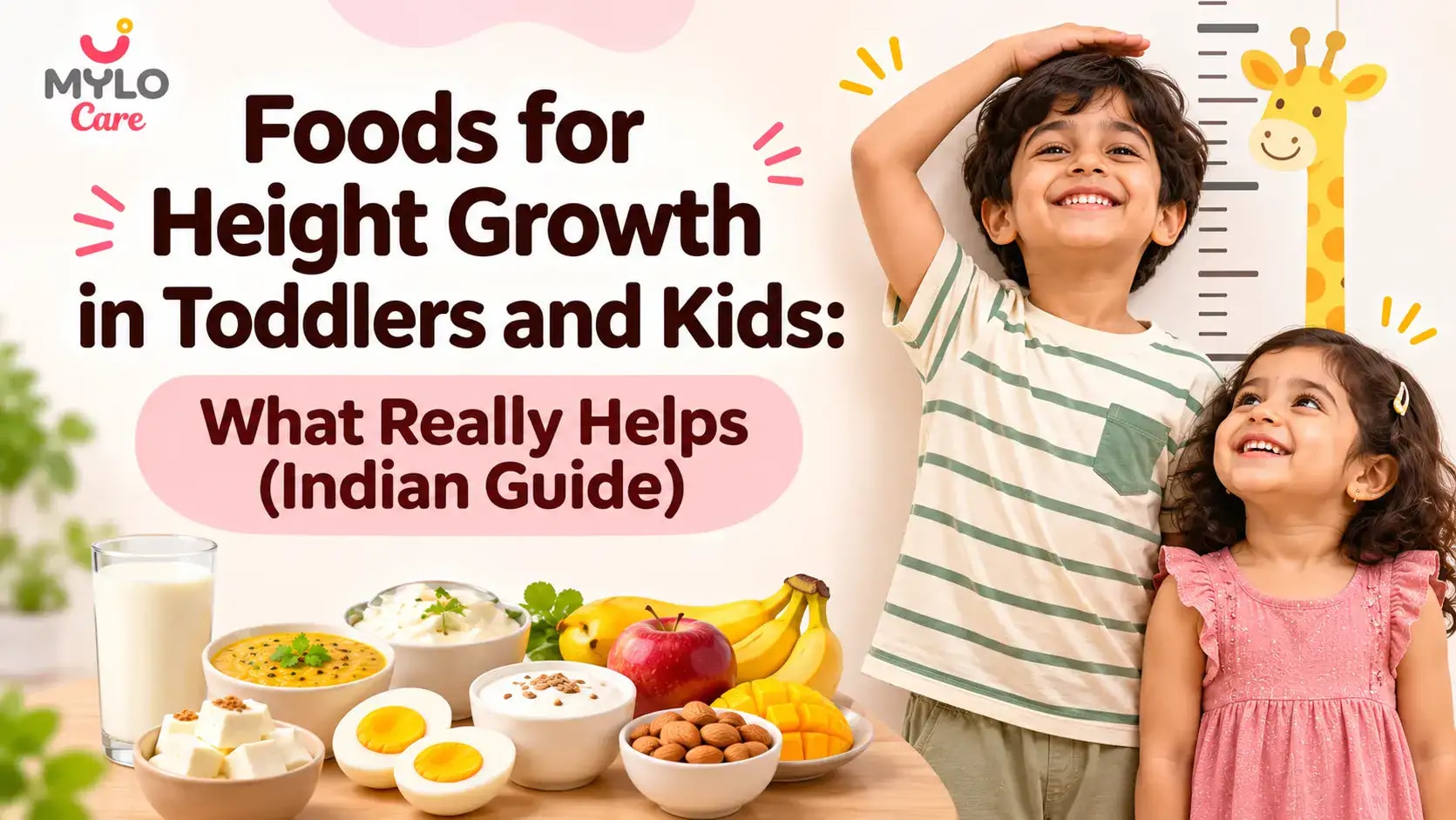
Foods for Height Growth in Toddlers and Kids: What Really Helps (Indian Guide)
 11 min


M.Sc. (Food & Nutrition) · 3 years experience
Key Takeaways
Quick overview in 30 seconds
- Height is mainly decided by genes, but good nutrition helps your child reach their full growth potential and avoid stunting from undernutrition.
- Offer a daily mix of protein foods like dal, milk, curd, paneer and eggs, plus ragi, iron-rich greens, fruits, vegetables and whole grains.
- Sleep, active outdoor play and vitamin D from sunlight also support healthy bone growth, so build regular routines along with balanced meals.
- Looking for nutritious foods to support your toddler's growth? Explore our MamaGro™ Protein Diskettes - High Protein & No Added Sugar - 250gm (50 Vanilla Diskettes).

 4.6
Quick Answer
No single food makes a child taller, because height is mostly decided by genes. But good nutrition helps your child reach their full height. Give a daily mix of protein (dal, milk, curd, paneer, eggs), calcium, iron-rich foods, fruit, vegetables and whole grains, along with enough sleep and active play. Check with your paediatrician if growth seems slow.
If your toddler looks shorter than other children their age, or relatives keep asking why, it is natural to worry and wonder what you can feed them. The good news is that a simple, varied Indian diet gives children what they need to grow. Here is what affects height, which foods help, how much is enough, and when to see a doctor.
Can food increase a child's height?
Food cannot make a child taller than their genes allow, but poor nutrition can stop a child reaching their full height. The WHO describes being too short for age as stunting, one form of undernutrition. In India, 35.5% of children under 5 were stunted, according to NFHS-5 (2019 to 2021).
So the goal is not to "boost" height, but to make sure nutrition, illness or poor sleep do not hold your child back.
What affects a child's height?
Factor | What it means |
|---|---|
Genes | The biggest factor. Children usually grow to a height similar to their parents' |
Nutrition | Enough energy, protein and key nutrients help a child reach their genetic potential |
Health | Frequent infections, worm infestations, diarrhoea or long illnesses can slow growth |
Sleep | Regular, enough sleep supports healthy growth |
Activity | Active play helps build strong bones and muscles |
Hormones and medical conditions | Problems like thyroid or growth hormone issues need a doctor's check |
How much protein does a toddler need?
ICMR-NIN 2020 recommends about 12.5 g of protein a day for children aged 1 to 3 years, 15.9 g for 4 to 6 years, and 23.3 g for 7 to 9 years. That is easy to reach with everyday foods:
Food | Approximate protein |
|---|---|
1 glass (200 ml) cow's milk | About 6.5 g |
1 boiled egg | About 6.7 g |
25 g paneer (2 small cubes) | About 4.7 g |
1 small katori dal (15 g raw dal) | About 3.5 g |
Values are based on the Indian Food Composition Tables 2017. A glass of milk, an egg or some paneer, and a katori of dal together cover a toddler's daily protein easily.
Best foods for height growth in toddlers and kids
1. Dal, pulses and legumes
Moong, masoor, toor and chana dal, rajma, chole and sprouts give protein and iron. The NHS suggests giving young children at least 2 portions of protein from plant sources, or 1 from animal sources, each day. Combine dal with rice or roti for better protein quality.
2. Milk, curd and paneer
Dairy gives protein and calcium for growing bones. The NHS notes that children under 2 need the energy from fat, so full-fat milk, curd and paneer are good choices for toddlers. From age 2, you can slowly introduce lower-fat options if your child is eating and growing well.
Food | Calcium (approx.) |
|---|---|
1 glass (200 ml) cow's milk | About 236 mg |
25 g paneer | About 119 mg |
3. Eggs
Eggs are an affordable, complete protein. Cook them well, as a boiled egg, omelette or bhurji.
4. Ragi and other millets
Ragi is very rich in calcium, about 364 mg per 100 g, according to IFCT. Ragi porridge, ragi dosa or ragi laddoos are good options. Bajra and jowar add iron.
5. Iron-rich foods
Iron is essential for growth and development. The NHS warns that a lack of iron can lead to iron deficiency anaemia, which can affect a child's physical and mental development. Good sources include green leafy vegetables like palak, dal, bajra, jaggery in small amounts, eggs, fish and meat. Serve them with vitamin C foods like lemon, orange, guava or tomato to help absorption.
6. Fish, chicken and meat, if you eat them
These give high-quality protein, iron and zinc. The NHS suggests at least 1 portion of oily fish a week for children who eat fish.
7. Fruits and vegetables
They provide vitamins, minerals and fibre. Offer a variety of colours: banana, papaya, guava, orange, carrots, beans and peas.
8. Nuts and seeds, safely
Almonds, peanuts and til add protein, healthy fats and minerals. The NHS advises not giving whole nuts to children under 5 because of the risk of choking. Give them ground into powder, as nut butters, or mixed into porridge or laddoos.
9. Whole grains
Roti, rice, dalia, oats and millets give the energy children need to grow and play.
Vitamin D and sunlight
Vitamin D helps the body use calcium to build strong bones. The body makes vitamin D from direct sunlight on the skin, and it is also found in egg yolks, oily fish and some fortified foods, according to the NHS. Let your child play outdoors regularly. Ask your paediatrician whether your child needs a vitamin D supplement.
A sample day for a 2 to 3 year old
Meal | Example |
|---|---|
Breakfast | Ragi or dalia porridge with milk, or a small besan chilla |
Mid-morning | A banana or a few pieces of seasonal fruit |
Lunch | Rice or roti with dal, a vegetable and curd |
Evening | A boiled egg, paneer cubes, or a small ragi laddoo with ground nuts |
Dinner | Khichdi with vegetables, or roti with dal and sabzi |
Bedtime | A glass of milk, if your child still drinks it |
Portions vary with age and appetite. Let your child eat to their hunger, and avoid forcing food.
Sleep and play matter too
Children need regular, enough sleep to grow, learn and play, as the American Academy of Pediatrics explains. Keep a regular bedtime and nap routine. Active play, like running, jumping, cycling and climbing, helps build strong bones and muscles.
Height growth myths vs facts
Myth | Fact |
|---|---|
Height powders or drinks make children taller | There is no good evidence that height powders or drinks make healthy children taller than their genes allow |
Hanging or stretching exercises add inches | Active play is good for bones, but there is no proof that hanging increases height |
"5 inches in 7 days" is possible | No food, exercise or product can do this |
Acupressure points increase height | There is no scientific evidence for this |
More milk means a taller child | Too much milk can fill a child up and leave less room for other foods they need |
A short child is always unhealthy | Many short children are simply following their family's height |
When should you see a paediatrician?
Talk to your child's doctor if:
your child's height or weight is falling behind on their growth chart over several checks
your child is much shorter than other children of the same age and than expected for your family's height
your child seems to have stopped growing
your child is always tired, pale, eating very little, or often ill
your child has frequent diarrhoea, tummy pain or worms
Your doctor will plot your child's growth on a chart, which shows the trend over time. See our toddler growth chart for 1 to 3 years.
Frequently Asked Questions
1. Which food increases height in toddlers? No single food does. A varied diet with protein (dal, milk, curd, paneer, eggs), calcium, iron, fruit, vegetables and whole grains helps a child reach their full height.
2. Does milk increase a child's height? Milk gives protein and calcium, which support growth, but it cannot make a child taller than their genes allow. Too much milk can reduce appetite for other foods.
3. How much protein does a 2 year old need? About 12.5 g a day for children aged 1 to 3 years, according to ICMR-NIN 2020. A glass of milk, an egg and a katori of dal cover this.
4. Do height increase powders work for kids? There is no good evidence that they make healthy children taller. A balanced diet is enough for most children. Ask your doctor before giving any supplement.
5. Can I give nuts to my toddler for height? Yes, but not whole. Give nuts ground into powder or as a smooth butter, because whole nuts are a choking risk for children under 5.
6. Does sleep affect height? Regular, enough sleep supports healthy growth. Keep a steady bedtime and nap routine.
7. My child is shorter than other children. Should I worry? Not always. Many children are simply following their family's height. Check their growth chart with your doctor, who will look at the trend over time.
8. When do children grow the fastest? Children grow fastest in the first year of life, and again during puberty. Growth is slower and steadier in the toddler and school years.
Related Articles
References
ICMR-National Institute of Nutrition. Nutrient Requirements for Indians, Recommended Dietary Allowances and Estimated Average Requirements, 2020 (brief note). https://www.nin.res.in/rdabook/brief_note.pdf
Longvah T, Ananthan R, Bhaskarachary K, Venkaiah K. Indian Food Composition Tables 2017. National Institute of Nutrition, ICMR. https://www.nin.res.in/ebooks/IFCT2017.pdf
NHS. What to feed young children. https://www.nhs.uk/baby/weaning-and-feeding/what-to-feed-young-children/
NHS. Vitamin D. https://www.nhs.uk/conditions/vitamins-and-minerals/vitamin-d/
World Health Organization. Malnutrition fact sheet, 2024. https://www.who.int/news-room/fact-sheets/detail/malnutrition
Press Information Bureau, Government of India. Underweight children (NFHS-5 nutrition indicators), 2022. https://pib.gov.in/PressReleasePage.aspx?PRID=1797701
American Academy of Pediatrics. Healthy Sleep Habits: How Many Hours Does Your Child Need? https://www.healthychildren.org/English/healthy-living/sleep/Pages/healthy-sleep-habits-how-many-hours-does-your-child-need.aspx
Medical disclaimer: This article is for general information only and is not a substitute for advice from your child's doctor. Please talk to your paediatrician about your child's growth, diet and any supplements.
Trusted by Indian Mamas Nurturing Growing Toddlers
Wholesome, mama-approved foods and nutrition essentials to support your little one's balanced diet and healthy growth every day.



Article Posted Under
Related Articles



Medical Disclaimer
This content is for informational purposes only and should not replace professional medical advice. Consult with a physician or other health care professional if you have any concerns or questions about your health. If you rely on the information provided here, you do so solely at your own risk.


AWARDS AND RECOGNITION

Mylo wins Forbes D2C Disruptor award

Mylo wins The Economic Times Promising Brands 2022
AS SEEN IN













- Mylo Care: Effective and science-backed personal care and wellness solutions for a joyful you.
- Mylo Baby: Science-backed, gentle and effective personal care & hygiene range for your little one.
- Mylo Community: Trusted and empathetic community of 10mn+ parents and experts.


Product Categories
Baby Carrier | Baby Soap | Stretch Marks Cream | Baby Cream | Baby Shampoo | Baby Massage Oil | Baby Hair Oil | Stretch Marks Oil | Baby Body Wash | Baby Powder | Baby Lotion | Diaper Rash Cream | Teether | Baby Kajal |