


Orders

Profile


Wallet


Pregnancy
24 days ago
Q: Mera aaj 36 week 1 ho gaya or Mera baby wait 2.7 h kya ye sahi h or ab delivery hogi to sef hogi
 6Answer


If you're concerned about how to maintain your nutrition during pregnancy then, you've come to the right place. Following meal plans, also known as pregnancy diet plans or diet charts can help you optimise your nutrition during pregnancy. They include the best foods that can provide you with all the essential nutrients you need at your stage of pregnancy. You can pick and choose from the delicious dishes suggested to further adapt the meal plan to your tastes.
How to use our pregnancy diet charts?
Our diet charts serve as a general guide to help you plan your weekly meals better. Whereas the pregnancy nutrition plan is customised according to each user. The aim is to help you identify foods that you like, and which are good sources of the nutrients you need at your stage of pregnancy.
Points to keep in mind
The plans are made with fruit and vegetables available in all seasons so that no matter what season you are in, you will find food sources in the market for the nutrients you need. If a fruit or vegetable is not available in your nearest markets, you can replace it with any other seasonal fruit or vegetable that offers the same nutrients.
A single fruit or vegetable can be a source of multiple nutrients. So you may notice that the same food is recommended in one trimester for a certain nutrient, and in another trimester for a different nutrient. For instance, lentils (dal or pulses) are a good source of folic acid, omega-3 fatty acids and iron, particularly for vegetarians.
What else do I need to know?
If you have a medical condition, food allergies or follow specific diets, it's recommended that you check with your doctor first before making changes to your diet. If you have gestational diabetes, you should refer to our gestational diabetes meal plan. While using our meal plans, stay hydrated and aim to drink at least 8 to 12 glasses of water a day.
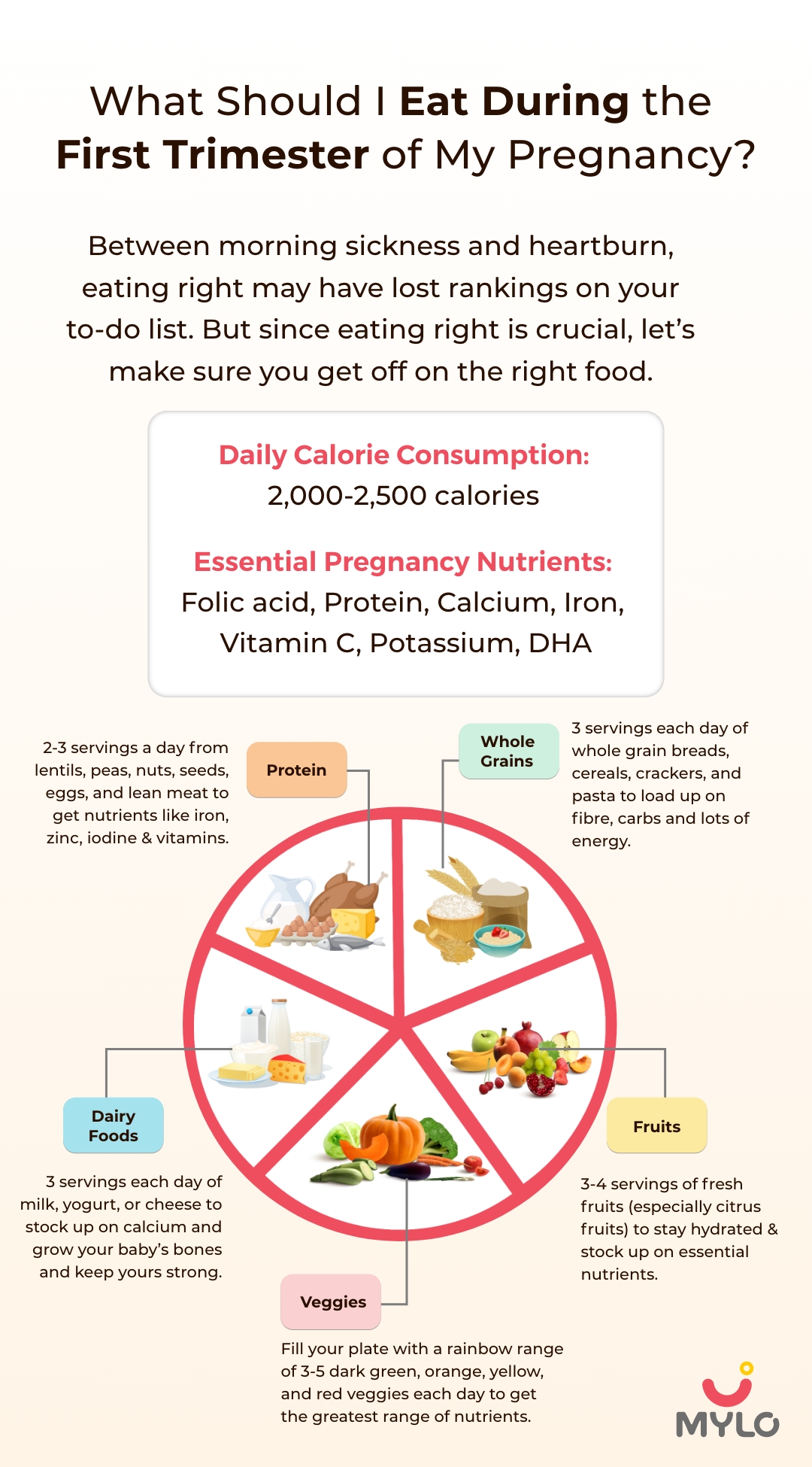
First-trimester pregnancy diet plans (4 - 13 weeks)
Although you need a variety of nutrients throughout your pregnancy to keep yourself and your baby healthy, here are a few nutrients which are particularly essential for your baby's development in the first trimester. The most important nutrients your body needs during the first trimester are folic acid, iron, and vitamin B6. Folic acid helps to protect your baby from birth disorders and neural tube disorders such as spina bifida and cleft palate. Iron is essential to produce healthy red blood cells that carry oxygen around your body. Not having enough iron can make you feel tired and breathless. Iron deficiency or anaemia (low Hb) is extremely common in India so, this nutrient is crucial during pregnancy. Morning sickness may leave you feeling queasy and unable to eat much. There is some evidence that suggests that foods rich in Vitamin B6 like peanuts, bananas, oats, fish, milk, fortified breakfast cereals etc. might help to ease nausea.
Second-trimester pregnancy diet plans (14 - 27 weeks)
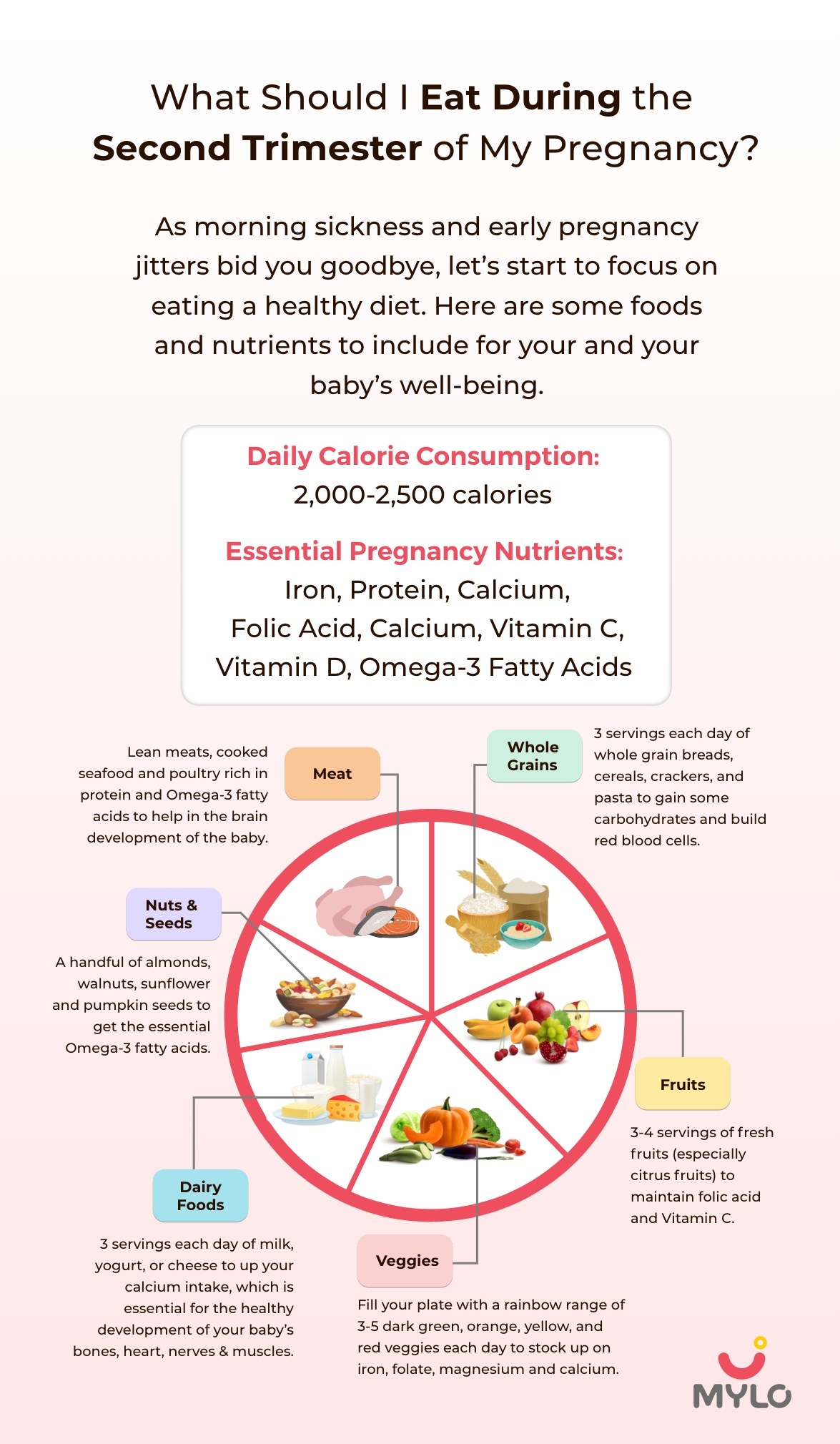
In the second trimester of pregnancy, your baby's bones are growing and so is their brain. To boost their brain and bone development, you need plenty of calcium, Vitamin D and omega 3. Another nutrient essential to consume during the second trimester is beta carotene, a form of vitamin A that promotes healthy blood and skin. Additionally, iron-rich foods continue to remain essential as anaemia (low Hb) is very common in India, especially among vegetarians.
Third-trimester pregnancy diet plans (28 - 40 weeks)
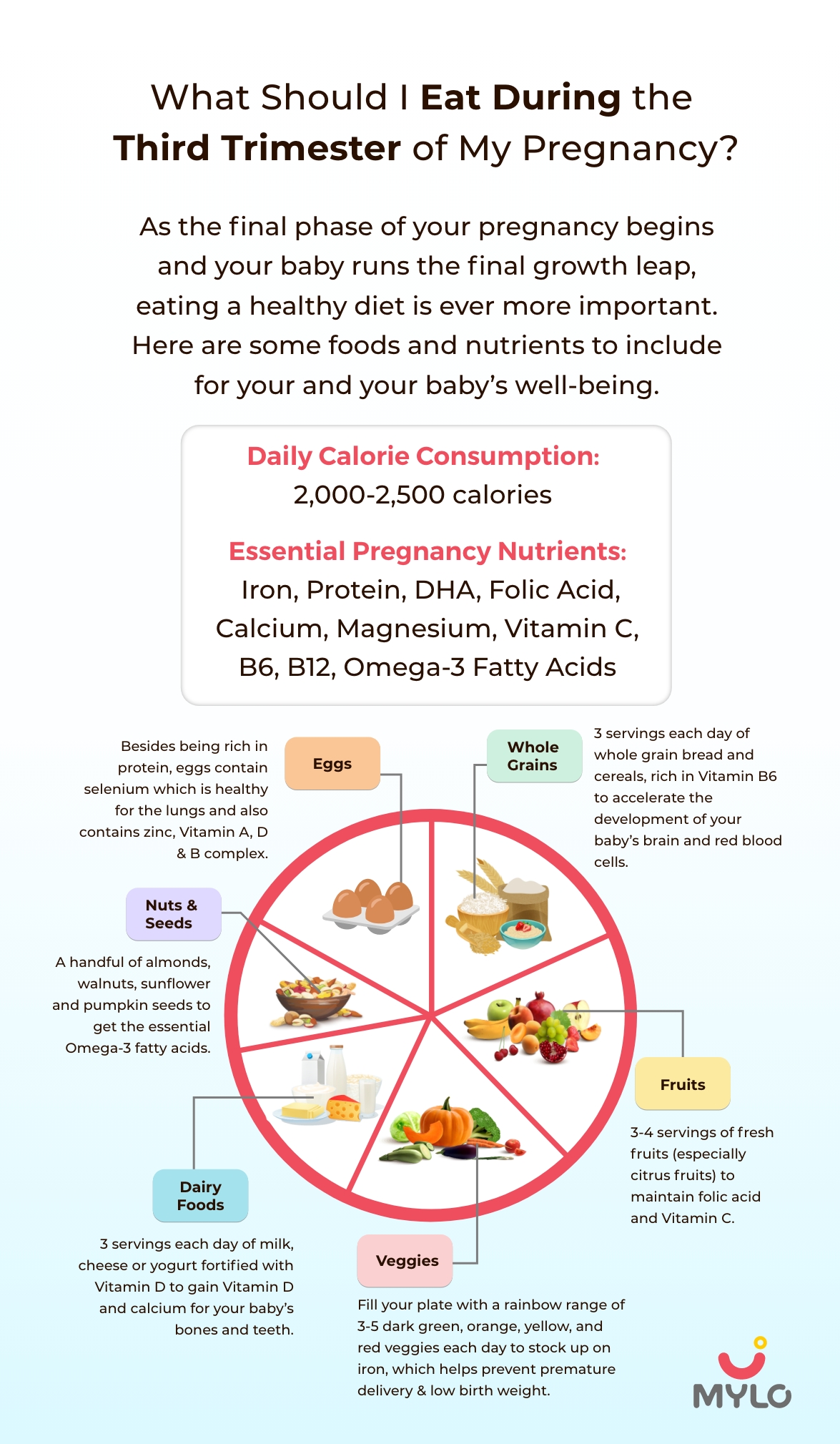
In the third trimester of pregnancy, your baby’s growth will pick up pace as they gain weight and prepare for life outside the womb. As a result, you'll observe that you’re gaining weight rapidly. Try not to stress over the extra kilos and focus on eating a well-balanced and healthy diet. As your baby begins to build layers of fat, your energy requirements will witness an increase in demand. Vitamin K is essential for the blood to clot, which is important to prevent bleeding during and after childbirth. So, try to eat plenty of foods rich in vitamin K in your third trimester. Retaining its importance, iron continues to be an essential nutrient in the third trimester as well to prevent anaemia. If you are anaemic, and the condition goes untreated, you may be at a higher risk of premature labour.
Now that you know what to eat, just eat healthily and take care of yourself!



If you are going to be a new mom soon, you have probably consulted with your doctor regarding your next appointment. In fact, doctors usually advise a pregnant woman to stick to a diet plan or maintain a healthy weight throughout the pregnancy.
Apart from that, your doctor is already aware of the fact that your baby's weight will greatly affect your weight. Keeping track of a fetal weight chart could indeed turn out to be quite helpful during your pregnancy period. It is always good to be informed well in advance about your weight as well as your fetus’s weight before you run into any kind of problems later on!
How Fetal Weight May Affect Mother's Health During Pregnancy?
A study in the JAMA journal signified that there are numerous factors affecting a mom's weight, including blood sugar content as well as blood pressure. In fact, these factors could directly affect your baby's weight. In fact, scientists worked on at least 30,000 women as well as their babies for a couple of months. Besides, this study helped numerous scientists to work out an efw pregnancy chart.
A mother that usually has a high weight at the start of her pregnancy may deliver a heavier baby. However, it isn't quite clear if it is the mother's weight that affects her baby's birth. However, this conclusion was disclosed by author Rachel Freathy at the University of Exeter Medical School.
Obese Pregnancy And Other Complications
Sometimes, obese pregnancy can also lead to situations where babies may be overweight. Apart from that, being vulnerable to gestational diabetes can make your baby prone to various risk factors as well. Another important aspect to keep in mind is that overweight individuals may be more vulnerable to miscarriages or even other pregnancy complications.
Thus, this is why maintaining a healthy weight during the entire course of your pregnancy may be important. You can also browse for a fetal weight chart in grams to keep a better track of your pregnancy. When you keep track of such a weight chart, you will be able to get some idea about the growing size of your baby. Besides, this could be quite advantageous since you can plan out your routine accordingly.
However, the actual amounts of triglycerides in the blood, which cause elevated cholesterol concentrations, do not appear to have an influence on the weight of the baby. Hypertension causes newborns to be smaller, most likely due to reduced blood flow, which enables fewer nutrients to reach the baby. This research was remarkable in that it employed genetics rather than simply observing the women's body weight.
Body Mass Index And Genetic Score
According to research, a collection of gene variations known to be related to BMI was generally allotted a 'genetic score,' depending on the BMI changes a woman inherited. Aside from heredity, BMI may be altered by a variety of factors, including food and activity habits. However, lifestyle influences have little effect on genetic scores.
Consequently, there is a link between the mother's BMI hereditary score and newborn weight, as well as the influence on delivery weight might be attributable to her BMI rather than lifestyle or other variables. An experiment with different genetic scores was carried out for additional parameters such as glucose and cholesterol levels. The researchers discovered greater proof for genetic correlations by evaluating these genetic linkages.
How Can Obesity Affect Your Health During Pregnancy?
After establishing cause as well as effect, the researchers turned their attention to the issue of why. Women who are overweight may have a high hyperglycaemic index in their blood, which is one of the primary variables linking a bigger mother to a bigger kid. The sugar stimulates the baby's production of insulin, which functions as a growth hormone.
Many overweight women tend to suffer from complications during their pregnancy. In fact, obese women may also find it difficult to get pregnant sometimes. However, with the right medication and weight loss program, you can lose the excess weight and then try out for pregnancy.
However, what the experts say is merely one side of the tale. Other processes are expected to be at work, but no one knows what they are at the moment, they say. They discovered no evidence of any influence on the baby's growth after checking for levels of solid fats and high blood cholesterol. Your doctor may also recommend keeping a record of fetal weight percentile chart by week kg.
There are numerous additional variables associated with being obese, such as the concentrations of fatty compounds in the blood, which were not tested in our study but might be crucial for the child's health. Future research will be required to put these to trial. Increased blood pressure appeared to negate the benefits of the female's BMI in the event of increased blood pressure.
One study found that, while heavier women have hypertension, the blood pressure alone causes kids to be born lighter, as opposed to greater BMI or glucose generating larger newborns. Therefore, if you suffer from any of the above-mentioned health issues during pregnancy, it may be high time to get in touch with your doctor. Your doctor is most likely to prescribe you a few tablets to keep your other health problems under control.
This highlights that there are many elements at work. Controlling blood hypertension in gestation is just as essential as keeping a healthy body weight or maintaining healthy glucose levels. Today, one can also find a fetal weight calculator in kg on the web!
Keeping track of Fetal Growth Chart
The researchers believe that by providing more evidence on how a mother's size, blood sugar, plus blood pressure impact a baby's birth weight, clinicians will be able to control these variables in their patients better. Birth injury or even blood sugar difficulties for large newborns, as well as respiratory and developmental concerns for little babies, are dangers for newborns with higher as well as lower birth weights.
Average Fetal Growth Record
If you wish to find out how big your baby can get during the course of the entire pregnancy, then keeping a chart showing fetal development could be quite beneficial. Babies usually grow at different rates. Therefore, the below-listed numbers are only approximate averages. Apart from that, the actual weight of your baby may be subjected to changes according to the present environmental factors.
Compared to the averages that are listed below, your baby may be either smaller or even bigger. However, it may be important for you to understand that the healthy weight of a baby can either be less or more than 5 pounds. The approximate calculations can help you have some clue about your baby's growing size.
Even at this early stage, a male child's characteristics differ from a girl child's measurements. The values on the histogram are just a mean of weights. A child's length is measured from head to rump until they are 14 weeks old. The length reported after 14 weeks is from head to foot. If you are nearing ten weeks of pregnancy, your fetus is most likely to be around 35 grams. However, if you are nearing fourteen weeks, the fetus is most likely to weigh around 93 grams.
At 21 weeks, the baby may weigh around 399 grams, with a crown to heel length of 27.4cm. At 30 weeks, one can expect the fetal weight to be around 1559 grams. At 41 weeks, the average weight is usually around 3787 grams.
Due Date
If you aren't aware of when your due date is, you can either consult your gynecologist or check out the online due date calculator. Although an online due date calculator may give an approximate date, it is always advised that you book numerous appointments with your doctor about which method of delivery could be favorable. Sometimes, it may be a bit risky for heavier babies to go through normal vaginal delivery. Thus, c-sections or even other times of delivery methods are usually utilized.
Furthermore, being born extremely little or very huge is connected with an increased risk of illnesses, including type 2 diabetes, early in adulthood, although the factors behind these correlations remain unknown. It's possible that the atmosphere in the uterus is to blame for these higher risks, which is something that needs to be verified during future research.
Conclusion
If you're obese or unhealthy and attempting to deliver or are currently pregnant, contact your specialist about how to effectively control your weight to maintain your baby's growth on track. Pregnancy is not the time to diet, but your doctor can provide you with recommendations for good food and moderate activity that will help ensure your baby has a healthy birth weight.
Furthermore, the authors advise having regular prenatal verification, which includes pulse rate and glucose testing. A newborn weight shows the baby's growth and development while in the womb. It is critical for newborns' development and well-being during their initial years of life. Consider browsing for an online fetal weight calculator in kg if you wish to learn more.
You may also like:
References
Ludwig DS, Currie J. (2010). The association between pregnancy weight gain and birthweight: a within-family comparison. www.ncbi.nlm.nih.gov
Leddy MA, Power ML, Schulkin J. (2008). The impact of maternal obesity on maternal and fetal health. www.ncbi.nlm.nih.gov
CDC. Weight Gain During Pregnancy. www.cdc.gov

Read More Answers (4)


Ask your question about pregnancy
Get expert answers within 5 minutes for FREE only on Mylo App
Related Questions
2 month pehle Mera Czer Delivery huva tha, Kya me apni sex life shuru kar sakty hu, ya fir or wait karna hoga

Hello everyone mera 4th month. 15 sep.se suru ho raha h mujhe Abbi tak kuch bhi nahi hora matlab ulti .pet dard ya kuch bhi balki us din se Jada bhukh lag rahi h. Dr. Toh bool rahi h ki achi baat h but mujhe mera wait badnai ki china ho rahi h or khayai bager bhi nahi raha Ja raha Kay jada khana bhi Merai or baby Kai liyai theek rahega plg. Reply ?
Hello all mom's Mera 35saptah chal raha hai mujhe dard suru ho Gaya hai lekeen mujhe option karana hai kya meri delivery sefe hogi 35week me delivery sefe hoti hai pls Ripley faast aur jisko 35week me delivery Hui ho wo pls mujhe bataye
Posted In
Pregnancy
3790063 Posts
Related Articles

Watery Eyes in Babies: Blocked Tear Duct Causes, Care and When to See a Doctor

Second Baby Planning: How Long Should You Wait Between Pregnancies?
Baby Kidney Swelling on Ultrasound (Antenatal Hydronephrosis): Will It Go Away?

Foods for Height Growth in Toddlers and Kids: What Really Helps (Indian Guide)
Related Topics


AWARDS AND RECOGNITION

Mylo wins Forbes D2C Disruptor award

Mylo wins The Economic Times Promising Brands 2022
AS SEEN IN













- Mylo Care: Effective and science-backed personal care and wellness solutions for a joyful you.
- Mylo Baby: Science-backed, gentle and effective personal care & hygiene range for your little one.
- Mylo Community: Trusted and empathetic community of 10mn+ parents and experts.


