


Orders

Profile


Wallet


Baby Care
2 months ago
Q: Mere baby k dant nikal rhe h kya kru use bukhar b aarha h or dast b lg rhe h
 7Answer


Quick Answer
Most babies get their first tooth between 4 and 10 months, usually around 6. Teething can cause drooling, chewing and fussiness, but not fever, diarrhoea or vomiting. At 3 to 4 months, putting everything in the mouth is often normal development. Gum pressure and a chilled teether like the Teether for Kids PO2 - Ring + Hot Air Balloon help.
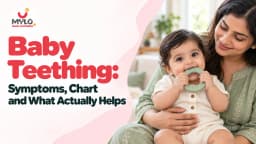
When your baby suddenly starts drooling, chewing on their fists and crying more than usual, it is natural to think a tooth is on the way. Sometimes it is. But at 3 to 4 months, the same signs are often just your baby discovering their hands and mouth. Here is how to tell the difference, when teeth usually come, what genuinely helps, and when your baby needs to see a doctor.
When do babies start teething?
Most babies get their first tooth somewhere between 4 and 10 months, with 6 months being the most common. The NHS says some babies start teething before 4 months and some after 12 months, and a few are even born with a tooth.
Late teething is usually normal. The American Academy of Pediatrics says the timing varies a lot and may run in families. If there is no tooth by around 18 months, mention it to your paediatrician or a paediatric dentist.
A baby born with a tooth, or one that appears in the first weeks, is called a natal or neonatal tooth. Show it to your paediatrician, since some are loose and need removing while others are left alone.
Is it teething or normal development at 3 to 4 months?
Often it is normal development. Around 3 to 4 months, babies discover their hands and start exploring the world with their mouths. The CDC lists "brings hands to mouth" as a milestone by 4 months, and advises parents to let their baby put safe things in their mouth to explore them. By 6 months, the CDC says babies put things in their mouth to explore them.
So if your 3 or 4 month old is:
putting fists, fingers and toys in their mouth
drooling more than before
crying when a toy is taken away
this is usually part of normal learning, and may or may not mean a tooth is coming. Some babies do start teething this early, so look for the gum signs below as well.
Also think about hunger. The CDC notes that a hungry 4 month old opens their mouth when they see the breast or bottle. Offer a feed if it has been a while.
Teething, normal development or illness?
What you notice | Teething | Normal development (3 to 6 months) | Possible illness, see a doctor |
|---|---|---|---|
Drooling | Yes, often more than usual | Yes, very common | Drooling with trouble swallowing or breathing |
Hands and toys in the mouth | Yes, gnawing and chewing hard | Yes, exploring | Not on its own |
Red, swollen or sore gum over one spot | Yes | No | Swelling of the face or jaw, or a hot tender gum |
Fussiness and poor sleep | For a few days around each tooth | Common at this age for many reasons | Crying that will not settle, or a baby who is unusually floppy or drowsy |
Temperature | Slightly raised, but under 38°C | Normal | 38°C or more is a fever, not teething |
Loose stools, vomiting, cough, runny nose, body rash | No | No | Yes. These are not caused by teething |
Tooth eruption chart
Teeth usually come in pairs, and the lower front two are typically first.
Teeth | Usual age |
|---|---|
Lower central incisors (bottom front two) | 6 to 10 months |
Upper central incisors (top front two) | 8 to 12 months |
Upper lateral incisors | 9 to 13 months |
Lower lateral incisors | 10 to 16 months |
First molars | 13 to 19 months |
Canines | 16 to 23 months |
Second molars | 23 to 33 months |
All 20 baby teeth are usually through by around 2 and a half to 3 years. Considerable variation is normal. What matters is steady progress rather than matching the chart exactly.
Teething symptoms
According to the NHS, teeth sometimes come through with no pain at all, or with mild symptoms that last a few days. Teething can cause:
drooling, sometimes a lot
chewing and gnawing on hands, toys and anything else
rubbing the ear, or 1 flushed cheek
a sore, red or swollen gum where the tooth is coming through
irritability and fussiness, usually for a few days around each tooth
disturbed sleep
a slightly raised temperature, but below 38°C
reduced appetite, or refusing the breast or bottle briefly
a mild rash or chapping around the mouth and chin from the drool
Sometimes a small bluish swelling appears over an emerging tooth. This is an eruption cyst. It is harmless and usually settles on its own.
What teething does NOT cause
This is the most important section on the page.
Teething does not cause:
Fever. Teething may cause a very slight rise in temperature, but not a fever
Diarrhoea. The NHS says there is no evidence that teething causes diarrhoea
vomiting
cough or runny nose
a rash on the body
prolonged loss of appetite
convulsions
If your baby has any of these, they are unwell with something else.
Why this matters more than it sounds: babies often start teething at around 6 months, which is also when the antibodies passed from their mother are fading and they begin getting infections. The timing overlaps, which is why the two get confused. Blaming a fever on teething is one of the commonest reasons a sick baby is not brought in.
Any fever in a baby under 3 months is an emergency, whatever else is happening.
What actually helps
Remedy | How | Notes |
|---|---|---|
Gum pressure with a clean finger | Rub the gum firmly but gently for a minute or two | Free, effective, and often the thing that works best |
A chilled teether | Refrigerate for 15 to 20 minutes. Never freeze | A frozen teether is hard enough to bruise or damage gums. Try the Teether for Kids PO2 - Ring + Hot Air Balloon |
A cold, clean washcloth | Dampen, chill in the fridge, and let your baby chew it | Supervise. Remove when soggy |
A solid silicone or rubber teether | Choose one-piece, solid, food-grade, with no small parts | Liquid or gel-filled teethers can break or leak |
Cold food, for babies already on solids | Chilled cucumber or apple in a mesh feeder | Only in a mesh fruit feeder, and only if your baby has started solids. Hard pieces are a choking hazard |
Extra feeding and comfort | Breast or bottle, cuddles, carrying, play | Sucking is soothing, and play can distract from the pain |
Wiping the drool | Pat, do not rub, and apply a plain barrier cream on the chin | Prevents the drool rash |
Paracetamol, if your baby is genuinely distressed | Only on your paediatrician's advice, at the correct dose for weight | Not a routine measure |
What to avoid
Avoid | Why |
|---|---|
Amber teething necklaces, and any necklace, bracelet or thread | Strangulation and choking risk. The AAP says they do nothing to relieve pain |
Teething gels that numb the gums, including those with benzocaine or lidocaine | The AAP says that in rare cases they can poison babies' blood cells and stop them carrying oxygen |
Homeopathic teething tablets and powders | The AAP says they provide no benefit, and some have been made with harmful substances |
Frozen teethers, or ice directly on the gums | Too hard, and can damage gums |
Honey rubbed on the gums | Unsafe under 12 months because of the risk of infant botulism. It also causes tooth decay |
Brandy, whisky or any alcohol on the gums | A traditional practice and a dangerous one. Alcohol is toxic to babies |
Rock salt, ajwain, ghee or herbal pastes on the gums | No benefit, and some can irritate the gums |
Hard rusks, biscuits or raw carrot sticks | Choking hazard. The NHS also notes that nearly all rusks contain sugar |
Anything sweet on a teether or dummy | Causes early tooth decay |
Aspirin, in any form | Never give aspirin to children |
Adult painkillers, or adult doses | Doses must be worked out by weight by a paediatrician |
Oral care from the first tooth
Most teething articles stop at remedies, but this is what prevents problems later.
Before teeth: wipe the gums with a clean, damp cloth once a day.
From the first tooth: brush twice a day with a soft baby toothbrush.
Use fluoride toothpaste. A rice-grain sized smear under 3 years, and a pea-sized amount from 3 to 6 years.
Brush last thing at night, and do not rinse with water afterwards. Just spit out.
You do the brushing until your child is around 7 or 8. They can have a turn first, but you finish.
Do not put your baby to bed with a bottle of milk or juice. Milk pooling around the teeth overnight is a main cause of early childhood tooth decay, which is very common in India.
Move to a cup from around 12 months where possible.
No sweetened water, juice in a bottle, or sugar on a dummy.
If you live in an area with naturally high fluoride in the water, which occurs in parts of India, ask your dentist about the right toothpaste for your child. Do not simply stop fluoride, since it protects against decay.
See our guide on when to start brushing your baby's teeth.
When to see a doctor or dentist
See a doctor the same day if your baby has:
any fever in a baby under 3 months
fever with drowsiness, poor feeding or a rash
diarrhoea or vomiting, especially with fewer wet nappies
refused all feeds
fast or laboured breathing
unusual drowsiness or floppiness
swelling of the face or jaw, or a hot, tender area on the gum, which may mean infection
Do not assume any of these is teething.
See a paediatric dentist if:
your child has reached their first birthday. The American Academy of Pediatric Dentistry recommends a first dental visit by age one, or within six months of the first tooth appearing, whichever comes first
no teeth have appeared by around 18 months
a tooth looks discoloured, brown, or has white spots or pitting
teeth are chipped or damaged after a fall
your baby was born with a tooth, or one appeared in the first weeks
the gums bleed easily or look swollen beyond the coming tooth
Frequently Asked Questions
1. Can a 4 month old baby be teething? Yes, some babies start teething before 4 months. But at this age, drooling and putting things in the mouth are also normal parts of development, so look for a sore, swollen gum before assuming it is a tooth.
2. My 3 month old puts everything in their mouth and drools. Is that normal? Yes. Bringing hands to the mouth and exploring things with the mouth are normal milestones at this age. Keep small objects out of reach and offer safe toys or a clean teether.
3. Does teething cause fever? No. Teething may cause a very slight rise in temperature, but below 38°C. A fever means your baby is unwell with something else and should be checked.
4. Does teething cause diarrhoea? No. There is no evidence that teething causes diarrhoea. Loose stools in a teething baby are a separate illness and need attention, especially if wet nappies reduce.
5. My baby is 12 months and has no teeth. Is that a problem? Usually not. Mention it at your next visit, and see a paediatric dentist if there are still no teeth by around 18 months.
6. Are amber teething necklaces safe? No. They carry strangulation and choking risks and have no proven benefit. Nothing should be worn around a baby's neck or wrist.
7. Should I freeze the teether? No. Chill it in the fridge for 15 to 20 minutes. A frozen teether is hard enough to damage your baby's gums.
8. Can I rub honey or brandy on the gums? No. Honey is unsafe under 12 months because of the risk of infant botulism, and alcohol is toxic to babies.
9. When should I start brushing my baby's teeth? As soon as the first tooth appears. Twice a day, with a rice-grain smear of fluoride toothpaste.
Related Articles
References
NHS. Baby teething symptoms. https://www.nhs.uk/conditions/baby/babys-development/teething/baby-teething-symptoms/
NHS. Tips for helping your teething baby. https://www.nhs.uk/conditions/baby/babys-development/teething/tips-for-helping-your-teething-baby/
American Academy of Pediatrics (HealthyChildren.org). When does teething start? https://www.healthychildren.org/English/ages-stages/baby/teething-tooth-care/Pages/Teething-4-to-7-Months.aspx
Centers for Disease Control and Prevention. Milestones by 4 months. https://www.cdc.gov/act-early/milestones/4-months.html
Centers for Disease Control and Prevention. Milestones by 6 months. https://www.cdc.gov/act-early/milestones/6-months.html
American Academy of Pediatric Dentistry. Oral health policies and recommendations. https://www.aapd.org/research/oral-health-policies--recommendations/
World Health Organization. Oral health fact sheet. https://www.who.int/news-room/fact-sheets/detail/oral-health
Medical disclaimer: This article is for general information only and is not a substitute for advice from your doctor. Never assume fever, diarrhoea or vomiting is due to teething. Seek care the same day for any fever in a baby under 3 months.

Read More Answers (5)


Ask your question about baby care
Get expert answers within 5 minutes for FREE only on Mylo App
Related Questions
Mera bby 4th mnth ka h use ki eyes se pani nikal raha h or cheekhe ari h use plz help kya kru

Meri bachchi ki aakho se kabhi kabhi pani nikalta h mtlb bo roti nhi h Tab bhi ye normal h kya ya ushki eyes m koi problem h doctor ko dikhna sahi rhega.. plzzz tell me ye normal h kya?? Plz
Meri baby ke bal me 3 ghao ke dane nikal rhe h mai kya kru
Posted In
Baby Care
4475045 Posts
Related Articles
क्या स्तनपान के दौरान पीरियड्स वापस आ सकते हैं?|(Can Periods Return While Breastfeeding In Hindi)

प्रसव के बाद बाल झड़ना तीन महीने में क्यों शुरू होता है? (Why Does Postpartum Hair Fall Begin Around Three Months In Hindi)
मज़ेदार और हंसाने वाली पहेलियां उत्तर सहित (Funny Paheliyan in Hindi)
कठिन पहेलियां उत्तर सहित|(Hard Paheliyan in Hindi with Answer)
Related Topics


AWARDS AND RECOGNITION

Mylo wins Forbes D2C Disruptor award

Mylo wins The Economic Times Promising Brands 2022
AS SEEN IN













- Mylo Care: Effective and science-backed personal care and wellness solutions for a joyful you.
- Mylo Baby: Science-backed, gentle and effective personal care & hygiene range for your little one.
- Mylo Community: Trusted and empathetic community of 10mn+ parents and experts.


