


Orders

Profile


Wallet


Pregnancy
1 month ago
Q: Mera 6 month chal rha h mujhe acdt ki problem ho rhi h or baby ki movement shi se nhi ho rhi h
 13Answer


Month Six: Your Baby Reaches a Life-Changing Milestone
Welcome to the sixth month of pregnancy, covering weeks 23 to 27 and the last month of the second trimester. This month brings a huge milestone: from around week 24, your baby is considered viable. That means if they were born now, they could survive with intensive medical care.
Your baby is also putting on fat, opening their eyes, and kicking harder than ever. For you, month six often brings a bigger bump, practice contractions, and the important glucose test for gestational diabetes.
In this guide you will learn:
How your baby grows from 500 grams to nearly 1 kg this month
What BPD means on your scan report and normal values for month six
Everything about the glucose test (OGTT) for gestational diabetes
Common sixth-month symptoms and how to manage them
An Indian diet chart, safe sex positions, and warning signs not to ignore
How Many Weeks Is 6 Months Pregnant?
Six months pregnant covers weeks 23 to 27. It is the final month of the second trimester. The third trimester begins at week 28.
Pregnancy month | Weeks | Trimester |
|---|---|---|
Month 5 | Weeks 18 to 22 | Second trimester |
Month 6 | Weeks 23 to 27 | Second trimester (final month) |
Month 7 | Weeks 28 to 31 | Third trimester |
Your Baby's Growth in Month Six: From a Grapefruit to a Cauliflower
By the end of month six, your baby is about 35 to 37 cm (14 inches) long from head to heel and weighs around 850 to 900 grams (about 2 pounds). They are adding fat quickly, so their skin looks less wrinkled and plumper.
Week | Length (head to heel, approx.) | Weight (approx.) | Size comparison | Key developments |
|---|---|---|---|---|
Week 23 | 28.5 cm | 500 g | Grapefruit | Baby begins rapidly adding fat; may survive with intensive care if born now |
Week 24 | 30 cm | 600 g | Corn on the cob | Baby is considered viable; lungs are developing but not ready to work on their own |
Week 25 | 34 cm | 660 g | Cauliflower (small) | More body fat makes the skin plumper and less wrinkled |
Week 26 | 35.5 cm | 760 g | Lettuce | Baby responds to sounds and your touch on the belly |
Week 27 | 36.5 cm | 875 g | Cauliflower | Baby can open their eyes and blink; regular sleep and wake times |
Milestones to celebrate this month
Viability: From around 24 weeks, a baby born early has a chance of survival with neonatal intensive care.
Eyes open: By week 27, your baby can open and close their eyes and blink.
Growing lungs: The lungs are forming the tiny air sacs and the substance (surfactant) needed to breathe after birth.
Plumping up: Fat builds under the skin, making your baby rounder and better at keeping warm.
Responding to you: Your baby may kick in response to music, your voice or a gentle press on your belly.
Sources: Cleveland Clinic, Fetal Development and NHS, 24 weeks pregnant.
6 Month Pregnancy Me BPD Kitna Hona Chahiye? (BPD on Your Scan Report)
BPD (biparietal diameter) is the width of your baby's head, measured from one side to the other on an ultrasound. Doctors use it, along with other measurements, to check your baby's growth and estimate their age.
Week | Average BPD (approx.) |
|---|---|
Week 23 | 55 to 58 mm |
Week 24 | 58 to 61 mm |
Week 25 | 61 to 64 mm |
Week 26 | 64 to 67 mm |
Week 27 | 67 to 70 mm |
Don't panic over a few millimetres. BPD varies between babies, and your doctor looks at it together with head circumference (HC), abdominal circumference (AC), thigh bone length (FL) and estimated fetal weight. A single measurement on its own doesn't mean there is a problem.
Baby Movements in Month Six: How Much Should Your Baby Move?
Your baby's kicks, rolls and jabs become stronger and more regular this month. Your partner can probably feel them from the outside now.
6 month pregnancy me baby ki movement kitna hona chahiye? There is no fixed number of kicks you should feel. Every baby has their own pattern. Get to know your baby's usual pattern, and contact your doctor right away if the movements slow down, stop or change.
Many babies are most active at night, when you lie down, or after you eat. Some moms also feel small, rhythmic jerks. These are usually baby hiccups, which are completely normal.
Source: NHS, Your baby's movements.
Baby breech (ulta) at 6 months? That's normal. Your baby still has room to turn around, and most settle head-down later in the third trimester.
6 Months Pregnant Belly: What to Expect
Your bump is growing quickly. By the end of this month, the top of your uterus sits a few centimetres above your belly button.
What you might notice | Why it happens |
|---|---|
A bigger, rounder, firmer bump | Your baby and uterus are growing fast |
Belly button popping out | The uterus pushes it forward |
New stretch marks | The skin is stretching quickly |
An itchy belly | Dry, stretched skin |
Feeling off balance | Your centre of gravity is shifting forward |
6 Months Pregnant Symptoms and How to Manage Them
Symptom | Why it happens | What helps |
|---|---|---|
Braxton Hicks (practice contractions) | The uterus practises tightening for labour | Rest, drink water, change position; see a doctor if they become painful or regular |
Back pain | The growing bump shifts your posture | Good posture, a pregnancy belt, flat shoes, prenatal yoga |
Swollen feet and ankles | Fluid build-up and pressure on veins | Raise your feet, avoid standing long, reduce salt, wear comfortable footwear |
Leg cramps | Circulation changes and pressure on nerves | Stretch your calves before bed; stay hydrated |
Dizziness (chakkar aana) | Blood pressure changes, low blood sugar or anaemia | Stand up slowly, eat regularly, drink water, avoid lying flat on your back |
Heartburn and acidity | The uterus pushes up on the stomach | Small meals; avoid spicy food; keep your head raised when sleeping |
Constipation and piles | Progesterone, iron tablets and pressure on veins | Fibre, water, fruits, walking; ask your doctor about safe creams |
Loose motions | Food infection, diet changes or hormones | Drink ORS or coconut water; eat simple food; see a doctor if it lasts over 24 hours or comes with fever or cramps |
Tingling or numb hands | Swelling presses on wrist nerves | Rest your hands; stretch your wrists; tell your doctor if severe |
Shortness of breath | The uterus presses on the diaphragm | Sit upright, slow down, and use pillows to raise your upper body at night |
Trouble sleeping | Bump size, backache, frequent urination | Sleep on your left side with a pregnancy pillow |
Stretch marks and itchy skin | Rapid skin stretching | Moisturise twice daily; see a doctor if the itching is severe |
Also read: Pain in the anus during pregnancy
The Glucose Test (OGTT): Screening for Gestational Diabetes
Gestational diabetes is high blood sugar that develops during pregnancy and usually goes away after delivery. It's especially important for Indian women to be screened, because women of South Asian origin have a higher risk.
When is the test done?
The oral glucose tolerance test (OGTT) is usually done between weeks 24 and 28. If you had gestational diabetes in a past pregnancy, your doctor may test you earlier too.
What happens during the test?
You drink a measured glucose solution, and your blood sugar is checked after a set time, usually 2 hours. Your doctor will tell you whether to come fasting.
Who is at higher risk?
Women of South Asian origin
Women who are overweight (BMI over 30)
Women who had gestational diabetes in a previous pregnancy
Women who previously had a baby weighing 4.5 kg or more
Women with a parent or sibling who has diabetes
Women over 40
Why does it matter?
Gestational diabetes usually causes no symptoms, which is why testing is important. If not managed, it can cause your baby to grow very large, increase the chance of a C-section or premature birth, and cause low blood sugar in your newborn. The good news is that most women manage it well with diet changes, regular activity and, if needed, medicine.
Source: NHS, Gestational diabetes.
Also read: Gestational diabetes mellitus in pregnancy
Other check-ups this month
At your monthly visit, your doctor will usually check your blood pressure, weight, urine, haemoglobin, your baby's heartbeat and the height of your uterus (fundal height). If you're Rh-negative, ask your doctor about the anti-D injection, which is usually given around 28 weeks.
Changes in Your Body and Mind This Month
Physical changes
Weight gain continues steadily. Your doctor will track whether it's in a healthy range for you.
Breasts keep preparing for feeding, and some women leak colostrum.
Varicose veins may appear on the legs or in the vulval area due to extra blood volume and pressure.
Skin darkening on the face, around the nipples, and along the linea nigra is common.
Emotional changes
As you near the third trimester, it's common to feel excitement mixed with worry about labour, your baby's health or becoming a parent.
Join antenatal classes to learn about labour, breastfeeding and newborn care.
Start discussing your birth plan and hospital with your doctor and partner.
If you feel persistently low or anxious, talk to your doctor. Support helps.
Sixth Month Pregnancy Diet: Building Your Baby's Strength
Your baby is gaining weight fast, so focus on protein, iron, calcium and healthy fats. Keep watching sugar and refined carbs, especially around your glucose test.
Supplements to continue
Iron and folic acid (IFA): One tablet daily (60 mg iron + 500 mcg folic acid), as advised under India's Anemia Mukt Bharat programme. Source: PMC, Anemia Mukt Bharat study.
Calcium: Continue as prescribed, at least 2 hours apart from iron.
Key nutrients for month six
Nutrient | Why it matters now | Indian food sources |
|---|---|---|
Protein | Supports rapid weight gain and muscle growth | Dal, rajma, chana, paneer, eggs, soya, chicken, fish |
Iron | Prevents anaemia and dizziness | Palak, methi, jaggery, dates, ragi, bajra, eggs, meat |
Calcium | Your baby's bones are hardening fast | Milk, curd, paneer, ragi, til, almonds |
Omega-3 (DHA) | Brain and eye development | Walnuts, flaxseeds, chia seeds, low-mercury fish |
Complex carbs | Steady energy without blood sugar spikes | Brown rice, millets, whole wheat roti, oats, dalia |
Fibre | Prevents constipation and piles | Fruits, vegetables, whole grains, salads |
Vitamin C | Better iron absorption and immunity | Amla, guava, oranges, lemon |


Sample 6th month pregnancy diet chart (Indian)
Time | Meal | What to eat |
|---|---|---|
7:00 am | Early morning | Warm water + 5 soaked almonds, 2 walnuts and 1 teaspoon soaked chia or flaxseeds |
8:30 am | Breakfast | Vegetable oats, ragi dosa, moong dal chilla with mint chutney, or a 2-egg omelette with multigrain toast |
11:00 am | Mid-morning | 1 fruit (guava, apple, pear, orange) + iron tablet with lemon water |
1:30 pm | Lunch | 2 multigrain rotis or 1 cup brown rice, dal, a green sabzi, salad and curd |
4:30 pm | Evening snack | Sprouts chaat, roasted chana, paneer tikka, or a protein-rich biscuit with milk + calcium tablet |
7:30 pm | Dinner | Roti with fish, chicken or paneer curry, a mixed vegetable sabzi, or millet khichdi with raita |
9:30 pm | Bedtime | 1 glass warm milk (without sugar) |
Tips for healthy blood sugar: Choose whole grains over maida, eat fruit instead of juice, pair carbs with protein, and limit sweets, sugary drinks and fried snacks.
Foods to avoid in the sixth month
Avoid | Why |
|---|---|
Alcohol and smoking | Harm your baby's growth and development |
Raw or undercooked eggs, meat and seafood | Risk of salmonella, listeria and toxoplasmosis |
Unpasteurised milk and soft cheeses | Can carry listeria |
Liver and liver products | Too much vitamin A can harm your baby |
High-mercury fish (shark, swordfish, king mackerel) | Can affect your baby's nervous system |
More than 200 mg caffeine a day | Linked to low birth weight |
Sweets, sugary drinks and fruit juices | Raise blood sugar and gestational diabetes risk |
Very salty and fried foods | Can worsen swelling and raise blood pressure |
Source: NHS, Foods to avoid in pregnancy.
6 month pregnancy me kya kha sakte hai? Quick answers
Food | Can you eat it? | What to keep in mind |
|---|---|---|
Amrud (guava) | Yes | Rich in vitamin C and fibre; wash well and eat ripe |
Anjeer (figs) | Yes, 2 to 3 a day | Good for iron and constipation; limit if you have high blood sugar |
Pomegranate | Yes | Great for iron and antioxidants |
Banana | Yes, 1 a day | Limit if you have gestational diabetes |
Aloo bukhara (plum) | Yes | Good fibre source; a smart fruit choice if your sugar is high |
Pear | Yes | Low-sugar, high-fibre fruit |
Mango | In moderation | High in natural sugar; limit if your blood sugar is high |
Chicken and fish | Yes | Fully cooked; choose low-mercury fish |
Also read: Second trimester diet chart · Anjeer in pregnancy · Pomegranate during pregnancy · Plum in pregnancy · Pear in pregnancy · Banana during pregnancy · Mylo protein biscuits for pregnancy
Sixth Month Pregnancy Care: Do's and Don'ts
Do's | Don'ts |
|---|---|
Get your glucose test (OGTT) between weeks 24 and 28 | Don't skip check-ups or tests |
Sleep on your left side with a pregnancy pillow | Don't lie flat on your back for long |
Walk daily and do prenatal yoga or swimming | Don't do high-impact exercise or heavy lifting |
Raise your feet and reduce salt to ease swelling | Don't stand or sit for long hours without breaks |
Do pelvic floor (Kegel) exercises | Don't wear tight clothes, belts or high heels |
Join antenatal classes | Don't ignore changes in your baby's movements |
Start planning your hospital and birth preferences | Don't take any medicine without your doctor's advice |
6 month pregnancy me sex kis position me karna chahiye? (Safe sex positions)
Sex is safe in a healthy pregnancy unless your doctor has advised otherwise. As your bump grows, choose positions that avoid pressure on your belly and avoid lying flat on your back for long:
Side-lying (spooning): Both partners lie on their sides; this is comfortable and puts no pressure on the bump.
Woman on top: You control the depth and pace.
Edge of the bed: You sit or lie at the edge of the bed with your feet supported.
Avoid sex if you have bleeding, fluid leakage, a low-lying placenta or a risk of preterm labour.
Is it safe to travel in the sixth month?
Usually, yes. Carry your medical file, wear compression socks, stay hydrated, and walk every 1 to 2 hours. Check airline rules before flying. Avoid long trips if your doctor has flagged any risk.
Also read: When to stop bending during pregnancy
Warning Signs in the Sixth Month: When to Call Your Doctor
Warning sign | What it could mean |
|---|---|
Your baby's movements slow down, stop or change | Your baby may need to be checked right away |
Regular, painful contractions or tightening | Possible preterm labour |
Watery fluid leaking from the vagina | Possible leak of amniotic fluid |
Vaginal bleeding | Placenta problems |
Severe headache, blurred vision, pain under the ribs, or sudden swelling of the face, hands or feet | Possible pre-eclampsia (high blood pressure) |
Severe itching on the palms and soles, especially at night | Possible liver condition (obstetric cholestasis) |
Extreme thirst, frequent urination and blurred vision | Possible high blood sugar |
Fever above 100.4°F (38°C) or burning while urinating | Infection |
Loose motions for more than 24 hours, or with fever or cramps | Dehydration or infection |
Your Sixth Month Pregnancy Checklist
Get your glucose test (OGTT) between weeks 24 and 28
Keep taking iron and calcium tablets daily
If you're Rh-negative, ask your doctor about the anti-D injection
Get to know your baby's movement pattern
Join antenatal classes
Shortlist your hospital and discuss your birth plan
Buy a pregnancy pillow and comfortable maternity wear
Start planning your baby's essentials and nursery
Plan your maternity leave
Keep doing pelvic floor exercises daily
Frequently Asked Questions About the Sixth Month of Pregnancy
1. How many weeks is 6 months pregnant?
Six months pregnant covers weeks 23 to 27. It is the last month of the second trimester.
2. What is the baby's weight at 6 months?
By the end of month six, your baby weighs around 850 to 900 grams (about 2 pounds) and is about 35 to 37 cm long.
3. Can a baby survive if born at 6 months?
From around 24 weeks, babies born early can survive with neonatal intensive care, and their chances improve with every extra week in the womb.
4. What should the BPD be at 6 months?
On average, about 55 to 70 mm between weeks 23 and 27. Your doctor reads BPD together with other measurements, so small differences are usually normal.
5. When is the glucose test done in pregnancy?
Usually between weeks 24 and 28. Women at higher risk may also be tested earlier.
6. How much should the baby move at 6 months?
There is no fixed number. Learn your baby's usual pattern and contact your doctor right away if the movements slow down or change.
7. Is dizziness (chakkar aana) normal at 6 months?
Mild dizziness can happen because of blood pressure changes, low blood sugar or anaemia. Stand up slowly, eat regularly and drink water. See your doctor if it happens often or with a headache, blurred vision or fainting.
8. Is loose motion normal at 6 months pregnant?
Occasional loose motions can happen. Drink ORS or coconut water and eat simple food. See your doctor if they last more than 24 hours or come with fever, cramps or blood.
9. My baby is breech (ulta) at 6 months. Is that a problem?
No. Your baby still has plenty of room to turn, and most move head-down later in pregnancy.
10. Which sex positions are safe at 6 months pregnant?
Side-lying (spooning), woman on top, and edge-of-the-bed positions are comfortable and avoid pressure on the bump. Avoid lying flat on your back for long.
The Bottom Line
Month six is a turning point: your baby becomes viable, opens their eyes, and fills out with fat, while you prepare to enter the final trimester. Don't miss your glucose test, keep up your iron and calcium, watch your sugar intake, and get to know your baby's movements. Next month, you'll begin the third trimester and the countdown to meeting your baby. Stay tuned for our guide to the seventh month of pregnancy.
Disclaimer: This article is for general information only and does not replace medical advice. Always consult your gynaecologist about your own pregnancy.
References



TL;DR
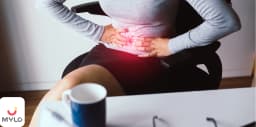
Heartburn, or acid reflux, affects nearly 50% of pregnant women, mostly due to hormonal changes that relax the valve at the top of the stomach and the pressure of the growing baby, not because of what you ate (NHS). Simple habit changes help most: smaller frequent meals, loose clothes, staying upright after eating, and leaving 2 to 3 hours between dinner and bed. Gentle home options like cold milk, yoghurt, almonds, ripe papaya and sugar-free gum can soothe symptoms. Importantly, you do NOT have to suffer through it: calcium-based antacids such as Tums are considered first-line safe in pregnancy and are commonly recommended, so ask your doctor rather than avoiding all medicine (American Pregnancy Association). Avoid raw or unripe papaya, and check before using any herb.
Quick Answer
Acid reflux in pregnancy is very common and is caused by pregnancy hormones relaxing the stomach valve plus pressure from the growing uterus. It usually gets more noticeable in later trimesters. You can ease it with smaller frequent meals, staying upright after eating, loose clothing, and gentle foods like cold milk, yoghurt, almonds and ripe papaya. You do not have to just endure it, calcium-carbonate antacids like Tums are considered safe first-line relief in pregnancy, so speak to your doctor. Avoid unripe papaya, and get your doctor's okay before any herbal remedy.
Author: Mylo Editorial Team, Mylo Parenting Desk Medically reviewed by: Mylo Editorial Board, aligned with ACOG, NHS and FOGSI guidance Last updated: 8 July 2026
Medical Disclaimer: This article is for informational purposes only and is not a substitute for professional medical advice. Do not start or stop any medicine, including over-the-counter antacids, without checking with your doctor. If you have severe, persistent heartburn, difficulty swallowing, vomiting, weight loss, or pain that spreads to the arm or jaw, seek medical care, as reflux can occasionally overlap with more serious conditions.
Key Takeaways
Heartburn affects nearly half of pregnant women, usually worsening in later trimesters (NHS)
It is caused by hormones relaxing the stomach valve and pressure from the growing baby, not spicy food alone
Habit changes help most: smaller frequent meals, staying upright, loose clothes, no late dinners
Gentle foods that may soothe: cold milk, yoghurt, almonds, ripe papaya, pears, apples, crackers
Calcium-carbonate antacids (Tums) are considered first-line SAFE in pregnancy, ask your doctor (American Pregnancy Association)
Avoid raw or unripe papaya, its papain and latex can trigger contractions
Peppermint can actually worsen reflux for some women, so it is not the best herb for heartburn
Check with your doctor before any herbal tea or supplement in pregnancy
What Causes Heartburn During Pregnancy?
Heartburn, also called acid reflux, is that burning, unsettled, heavy feeling behind the breastbone or in the upper stomach. In pregnancy it is extremely common, affecting nearly 50% of expectant mothers (NHS).
Contrary to popular belief, it has little to do with what you ate. Two pregnancy changes are the real cause:
Pregnancy hormones (especially progesterone) relax the ring of muscle at the top of the stomach, letting acid rise back up into the food pipe
The growing uterus pushes up on the stomach, especially in the second and third trimesters
Because both causes increase as pregnancy advances, reflux often feels worse later on. The good news is that most cases respond well to simple measures, and safe relief is available.
A Note on Antacids: You Do Not Have to Just Suffer
An old myth says pregnant women should avoid all antacids and rely only on home remedies. That is not correct. Calcium-carbonate antacids, such as Tums, are considered a first-line, safe option in pregnancy and are commonly recommended by doctors, partly because they work locally in the stomach and are barely absorbed (American Pregnancy Association).
What to keep in mind:
Use them in the recommended dose, not by the handful
Avoid antacids containing sodium bicarbonate (can cause fluid retention) unless your doctor advises
If you need antacids often, tell your doctor so they can check the dose and rule out anything else
The takeaway: try the home measures below, but if heartburn is troubling you, ask your doctor about a safe antacid rather than enduring it.
Home Remedies for Heartburn During Pregnancy
Alongside habit changes (loose clothes, smaller frequent meals, and 2 to 3 hours between dinner and bedtime), these gentle remedies can help.
Remedy | How It May Help | Good to Know |
|---|---|---|
Yoghurt | A cooling probiotic that can soothe the stomach | Add a little to meals; choose plain, not very sugary |
Cold milk | May help settle acid; a spoon of honey can add to the soothing effect | Sip when symptoms start |
Ginger | Eases nausea and may reduce irritation; use small amounts | A weak ginger tea or a little in food; avoid large medicinal doses |
Almonds | A filling snack with healthy fats, protein and fibre | A small fistful between meals |
Ripe papaya | Ripe papaya, in small amounts, is generally soothing and safe | AVOID raw or unripe papaya (can trigger contractions) |
Pears and apples | Can relieve acidity; eat with the peel, cold works best | Great as an after-meal treat |
Crackers | Dry foods can absorb acid and settle the stomach | Handy for quick relief |
Sugar-free gum | Chewing boosts saliva, which helps neutralise acid | Keep some handy after meals |
About Apple Cider Vinegar
Apple cider vinegar is a popular home remedy, but the evidence is weak and it is still acidic, so it does not reliably "neutralise" stomach acid. If you want to try it, dilute one tablespoon well in a glass of water and see how you feel, and stop if it worsens symptoms. Check with your doctor first.
About Herbal Teas (and Peppermint)
Herbal teas can feel soothing, but choose carefully. Peppermint, though often suggested, can actually relax the stomach valve and make reflux worse for some women, so it is not the best choice specifically for heartburn. Always get your doctor's approval before any herbal tea or herb in pregnancy.
Everyday Tips to Prevent Acid Reflux
Small habits make a big difference:
Sit upright for at least 45 minutes after every meal, do not lie down
Take a slow walk when you feel acidity or heaviness starting
Sip something cold if a burning sensation begins
Avoid very hot, spicy or oily foods if you are prone to heartburn
Eat slowly, chew well, and take smaller mouthfuls, as hard-to-digest food makes the stomach release more acid
Eat smaller, more frequent meals instead of large ones
Prop your head and upper body up with pillows at night
Indian Context
Many Indian meals are spicy and oil-rich, which can aggravate reflux in those already prone to it, especially heavy late dinners. Simple swaps help: lighter evening meals eaten earlier, buttermilk (chaas) or plain curd with food, and cold milk or fennel (saunf) after meals. If home measures are not enough, do not hesitate to ask your obstetrician about a pregnancy-safe antacid, self-medicating with random remedies or high doses is not the answer.
Myths vs Facts
Myth | Fact |
|---|---|
Heartburn means you ate too much spicy food | It is mainly caused by pregnancy hormones and pressure from the baby |
All antacids are unsafe in pregnancy | Calcium-carbonate antacids like Tums are considered first-line safe; ask your doctor |
Papaya is good for heartburn, so eat any papaya | Only ripe papaya in small amounts; raw or unripe papaya should be avoided |
Heartburn harms the baby | Heartburn is uncomfortable for you but does not harm your baby |
Frequently Asked Questions
Pregnancy mein heartburn ke liye kaun sa gharelu upay safe hai? (Hinglish)
Thanda doodh, curd (dahi), thode almonds, pake hue papite ki chhoti quantity, aur khaana khane ke baad seedha baithna, yeh sab safe aur helpful hain. Chhote chhote meals lein aur dinner jaldi karein. Agar phir bhi aaram na mile, to doctor se pooch kar calcium wala antacid (jaise Tums) le sakti hain. Kaccha ya raw papita bilkul avoid karein.
Kya pregnancy mein antacid lena safe hai? (Hinglish)
Haan, calcium carbonate wale antacid (jaise Tums) ko pregnancy mein first-line safe maana jaata hai aur doctor aksar recommend karte hain. Bas recommended dose mein lein, muthhi bhar kar nahin. Sodium bicarbonate wale antacid avoid karein. Zaroorat baar baar pade to doctor ko batayein.
When does heartburn usually start in pregnancy?
It can appear at any stage but is most common and intense in the second and third trimesters, as the growing uterus presses on the stomach. It usually eases after delivery.
Is it safe to eat papaya for heartburn in pregnancy?
Only ripe papaya, in small amounts, is generally considered safe and soothing. Raw or unripe (green) papaya should be avoided in pregnancy, as its papain and latex can stimulate the uterus.
When should I see a doctor about pregnancy heartburn?
See your doctor if heartburn is severe or constant, disturbs your sleep, comes with difficulty swallowing, vomiting or weight loss, or is not controlled by home measures, so you can be offered safe treatment.
References
NHS. Indigestion and heartburn in pregnancy. www.nhs.uk
American Pregnancy Association. Tums During Pregnancy: Safety, Benefits & Dosage. americanpregnancy.org
Law R, Maltepe C, Bozzo P, Einarson A. (2010). Treatment of heartburn and acid reflux associated with nausea and vomiting during pregnancy. Canadian Family Physician / NCBI. pmc.ncbi.nlm.nih.gov
Medically reviewed by Mylo Editorial Board
Read More Answers (11)


Ask your question about pregnancy
Get expert answers within 5 minutes for FREE only on Mylo App
Related Questions
Hello everyone mera 4th month. 15 sep.se suru ho raha h mujhe Abbi tak kuch bhi nahi hora matlab ulti .pet dard ya kuch bhi balki us din se Jada bhukh lag rahi h. Dr. Toh bool rahi h ki achi baat h but mujhe mera wait badnai ki china ho rahi h or khayai bager bhi nahi raha Ja raha Kay jada khana bhi Merai or baby Kai liyai theek rahega plg. Reply ?

Mera kl se 18 week start hone wala h but mujhe baby movement nhi ho rhi h aur ek problem v h mera kafi dino se pet kharab h isiliye mera weight v km ho rha h plz help me I'm very upset
Mera 7 month chal rha hai or mujhe right side neeche ki trf bahut pain ho rha h iski bajay se need vhi nhi aa rhi kya kru please reply any one
Posted In
Pregnancy
3789823 Posts
Related Articles




Related Topics


AWARDS AND RECOGNITION

Mylo wins Forbes D2C Disruptor award

Mylo wins The Economic Times Promising Brands 2022
AS SEEN IN













- Mylo Care: Effective and science-backed personal care and wellness solutions for a joyful you.
- Mylo Baby: Science-backed, gentle and effective personal care & hygiene range for your little one.
- Mylo Community: Trusted and empathetic community of 10mn+ parents and experts.


