


Orders

Profile


Wallet

Is Jaggery (Gur) Safe During Pregnancy? Benefits, Risks and How Much to Eat
 9 Likes|
 9 min


M.Sc. (Food & Nutrition) · 3 years experience
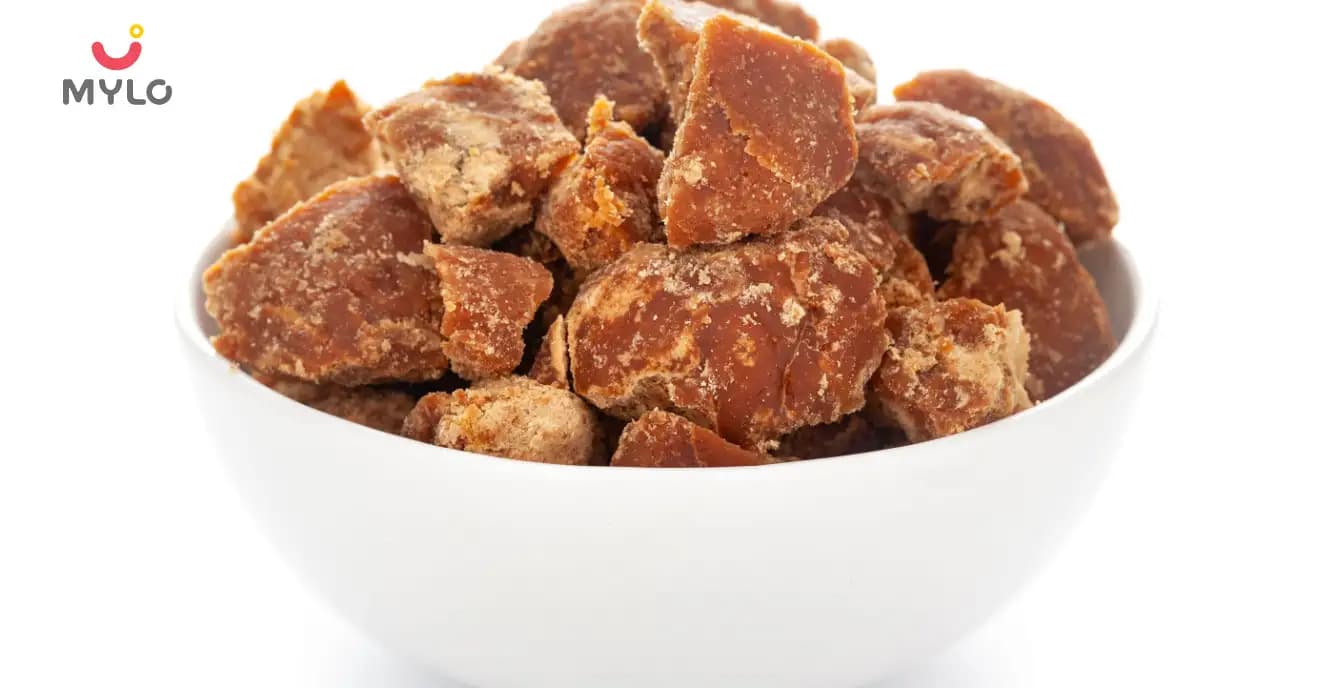
Key Takeaways
Quick overview in 30 seconds
- Jaggery (gur) is safe during pregnancy in small amounts across all trimesters, but it is still about 85% sugar and should replace white sugar, not be added on top of it.
- A 20g piece gives only about 0.9 mg of iron, so gur cannot treat anaemia on its own—iron tablets, palak, bajra, ragi and vitamin C foods matter far more.
- Risks include blood sugar spikes, weight gain, tooth decay and adulterated jaggery, so avoid or limit gur if you have gestational diabetes and always buy FSSAI-certified brands.
- What can truly support your iron and nutrition in pregnancy? Explore our MamaGro™ Protein Diskettes - High Protein & No Added Sugar - 250gm (50 Vanilla Diskettes).
 4.6
 4.7
 4.4
Quick Answer
Yes, jaggery (gur) is safe during pregnancy in small amounts, in every trimester. But it is still sugar: about 85% carbohydrate, with only a little iron, about 0.9 mg in a 20 g piece. Use a small piece instead of white sugar, not on top of it, and avoid it or ask your doctor if you have gestational diabetes.
Gur is a favourite in Indian homes, from til-gur laddoos in winter to a small piece after meals, and many families believe it is "good for the blood" in pregnancy. It is a better choice than white sugar in some ways, but it is not a health food. Here is what gur really gives you, how much is sensible, and when to be careful.
Can you eat jaggery during pregnancy?
Yes. Jaggery is safe in small amounts throughout pregnancy, including the first trimester. There is no evidence that it harms you or your baby when eaten in normal amounts. The main thing to watch is the sugar, because gur raises blood sugar much like white sugar does.
Is jaggery safe in the first trimester?
Yes. A small piece of gur is fine in early pregnancy. Some women like a little gur with ginger tea or after meals on nausea days. Keep the portion small.
What is in jaggery?
According to the Indian Food Composition Tables 2017, cane jaggery contains:
Nutrient | Per 100 g | Per 20 g piece (about 1 tablespoon) |
|---|---|---|
Energy | About 354 kcal | About 71 kcal |
Carbohydrates (mostly sugar) | About 85 g | About 17 g |
Iron | About 4.6 mg | About 0.9 mg |
Calcium | About 107 mg | About 21 mg |
Magnesium | About 115 mg | About 23 mg |
Potassium | About 488 mg | About 98 mg |
What this means for you:
Jaggery is mostly sugar. A 20 g piece has about 17 g of sugar, close to the same amount as 4 teaspoons of white sugar.
It has some minerals that white sugar does not, such as iron, calcium, magnesium and potassium. But in the small amount you should eat, these are modest.
It is not a major source of iron. A 20 g piece gives about 0.9 mg. For comparison, 100 g of bajra flour gives about 6.4 mg of iron.
Does jaggery help with anaemia in pregnancy?
Only a little. Anaemia is very common in Indian pregnancies: 52.2% of pregnant women in India are anaemic, according to NFHS-5. A small piece of gur adds a small amount of iron, but eating more gur to raise iron would add a lot of sugar too.
To build your iron, rely on:
the iron tablets your doctor prescribes. See how to take iron and folic acid tablets
iron-rich foods like palak, methi, bajra, ragi, dal, rajma, chana, eggs and meat. See is millet safe during pregnancy
vitamin C foods like amla, guava, oranges or lemon with meals, to help your body absorb iron
Benefits of jaggery in pregnancy
A better swap for white sugar: if you are going to add a sweetener, a small piece of gur gives a few minerals that white sugar does not.
A small amount of iron, calcium and magnesium.
Comfort and tradition: gur in til laddoos, ragi porridge or ginger tea can make healthy foods more enjoyable.
Many websites claim that jaggery controls blood pressure, purifies the blood, cleanses breast milk, eases joint pain or arthritis, reduces water retention or prevents infections in pregnancy. There is no good evidence for any of these claims.
Risks of jaggery in pregnancy
Blood sugar: gur raises blood sugar like sugar does. If you have gestational diabetes, avoid it or ask your doctor or dietitian whether a small amount fits your plan. Do not assume gur is a "safe" sugar.
Weight gain: at about 354 kcal per 100 g, gur and gur sweets like chikki, laddoos and halwa add calories quickly.
Tooth decay: like any sugar, frequent gur can harm your teeth.
Adulterated or unclean jaggery: some loose jaggery may be mixed with chemicals, colours or dirt. Buy sealed jaggery from a trusted brand with an FSSAI licence number on the label, and store it in a clean, dry container.
How much jaggery can you eat in pregnancy?
There is no official limit for jaggery, so treat it as sugar. The WHO advises keeping free sugars, which include sugars added to food by the cook, below 10% of your daily energy.
For most women, a small piece of about 10 to 20 g a day, used in place of white sugar, is a sensible amount. If you also have sweet chai, mithai or desserts on the same day, have less.
Trimester | Is jaggery okay? | Tip |
|---|---|---|
First (weeks 1 to 13) | Yes, in small amounts | A little gur in ginger tea on nausea days |
Second (weeks 14 to 27) | Yes, in small amounts | Use it instead of sugar, not as well as sugar |
Third (weeks 28 to 40) | Yes, in small amounts | Watch portions if your sugar tests are borderline |
Healthy ways to eat jaggery in pregnancy
A small piece after a meal, in place of a sweet
Til (sesame) and gur laddoos, in small portions
Ragi or dalia porridge sweetened with a little gur
Ginger tea with a little gur instead of sugar
Gur in chana or peanut chikki, as an occasional snack
Jaggery myths vs facts
Myth | Fact |
|---|---|
Gur is a superfood for anaemia | A 20 g piece has only about 0.9 mg of iron. Tablets and iron-rich foods matter far more |
Gur is safe for diabetes because it is natural | It raises blood sugar like sugar. Ask your doctor if you have gestational diabetes |
Gur purifies the blood | There is no scientific evidence for this |
Gur is "garam" and causes miscarriage or bleeding | There is no evidence for this in normal amounts |
More gur means a healthier baby | Extra gur adds sugar and calories, not health benefits |
When should you see a doctor?
Contact your doctor if you:
have gestational diabetes and see high sugar readings
feel very tired, breathless, dizzy or look pale, which can be signs of anaemia
are gaining weight much faster than your doctor expects
have been told your haemoglobin is low and want to know which foods and supplements to take
Frequently Asked Questions
1. Can I eat jaggery daily during pregnancy? Yes, a small piece of about 10 to 20 g a day, in place of white sugar, is fine for most women.
2. Is jaggery good in the first trimester? Yes, small amounts are safe in early pregnancy. Some women find a little gur in ginger tea helpful on nausea days.
3. Does jaggery increase haemoglobin? Only slightly. A 20 g piece has about 0.9 mg of iron. Take your iron tablets and eat iron-rich foods for real improvement.
4. Can I eat jaggery if I have gestational diabetes? Ask your doctor or dietitian first. Jaggery raises blood sugar much like sugar does.
5. Is jaggery better than sugar in pregnancy? Slightly, because it contains some minerals. But it has almost as much sugar, so use it in small amounts instead of sugar.
6. Is jaggery heat (garam) for pregnancy? There is no scientific evidence that normal amounts of jaggery are harmful or "garam" in pregnancy.
7. Are til-gur laddoos good in pregnancy? Yes, in small portions. Sesame adds calcium and healthy fats, but the laddoos are also high in sugar and calories.
Related Articles
References
Longvah T, Ananthan R, Bhaskarachary K, Venkaiah K. Indian Food Composition Tables 2017. National Institute of Nutrition, ICMR. https://www.nin.res.in/ebooks/IFCT2017.pdf
World Health Organization. WHO calls on countries to reduce sugars intake among adults and children, 2015. https://www.who.int/news/item/04-03-2015-who-calls-on-countries-to-reduce-sugars-intake-among-adults-and-children
Press Information Bureau, Government of India. NFHS-5 findings on anaemia. https://pib.gov.in/PressReleasePage.aspx?PRID=1795421
Medical disclaimer: This article is for general information only and is not a substitute for advice from your doctor. Please talk to your doctor or dietitian about your diet in pregnancy, especially if you have gestational diabetes or anaemia.
Trusted By Mamas Nourishing Every Trimester With Care
Gentle pregnancy nutrition essentials to support your iron, energy and growing baby alongside a balanced Indian diet.
MamaGro™ Protein Diskettes - 250gm - Vanilla
Supports Healthy Placenta | Supports Fetal Development



Pregnancy Massage Oil + Coconut Oil - 200 ml each


Organic Aloe Vera (300 ml)
Nurtures Skin & Hair | Reduces Suntan | Soothes Burns | Enhances Hair Resilience



Article Posted Under
Related Articles


Related Topics

Medical Disclaimer
This content is for informational purposes only and should not replace professional medical advice. Consult with a physician or other health care professional if you have any concerns or questions about your health. If you rely on the information provided here, you do so solely at your own risk.


AWARDS AND RECOGNITION

Mylo wins Forbes D2C Disruptor award

Mylo wins The Economic Times Promising Brands 2022
AS SEEN IN













- Mylo Care: Effective and science-backed personal care and wellness solutions for a joyful you.
- Mylo Baby: Science-backed, gentle and effective personal care & hygiene range for your little one.
- Mylo Community: Trusted and empathetic community of 10mn+ parents and experts.


Product Categories
Baby Carrier | Baby Soap | Stretch Marks Cream | Baby Cream | Baby Shampoo | Baby Massage Oil | Baby Hair Oil | Stretch Marks Oil | Baby Body Wash | Baby Powder | Baby Lotion | Diaper Rash Cream | Teether | Baby Kajal |