


Orders

Profile


Wallet

Is Papaya (Papita) Safe During Pregnancy? Ripe vs Unripe, Benefits, Risks and How Much to Eat
 1 Likes|
 10 min

Masters in Food & Nutrition · 8 years experience
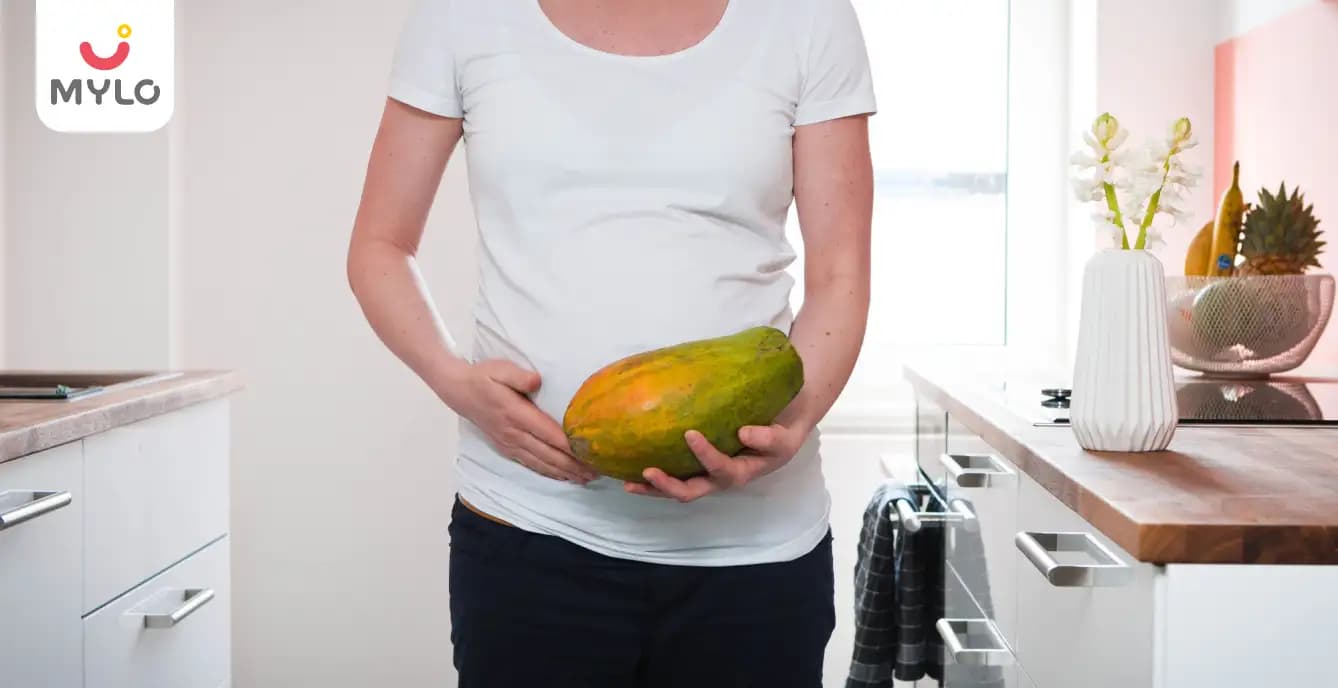
Key Takeaways
Quick overview in 30 seconds
- Fully ripe papaya with yellow-orange skin and soft orange flesh is generally safe in pregnancy in normal amounts, about one small bowl (100 g) daily.
- Unripe or semi-ripe papaya, papaya seeds and the white latex should be avoided throughout pregnancy because latex causes uterine contractions in animal studies.
- Ripe papaya provides vitamin C, folate, fibre and beta-carotene, helping iron absorption, easing constipation and supporting overall nutrition during pregnancy.
- Looking for safe pregnancy nutrition support? Explore our MamaGro™ Protein Diskettes - High Protein & No Added Sugar - 250gm (50 Vanilla Diskettes).

 4.6
 4.7
 4.5
Quick Answer
Fully ripe papaya, with yellow-orange skin and soft orange flesh, is generally considered safe in pregnancy in normal amounts, about one small bowl a day. Unripe or semi-ripe papaya, papaya seeds and the white sap (latex) should be avoided, because papaya latex causes uterine contractions in animal studies.
Papaya is probably the fruit Indian families warn against most in pregnancy, and many women avoid it completely for nine months. The truth is more specific than "never eat papaya". What matters is how ripe it is. Here is what the research shows, how to tell ripe from unripe, the benefits, the risks, and how much is sensible.
Can pregnant women eat papaya?
Yes, if it is fully ripe. Ripe papaya is a nutritious fruit and can be one of your daily fruit portions. Unripe (green) and semi-ripe papaya are a different story and are best avoided throughout pregnancy.
Is papaya safe in the first trimester?
Fully ripe papaya in small amounts is not linked to miscarriage in the available research, including in early pregnancy. But many doctors advise extra caution in the first trimester, and some suggest skipping papaya until the second trimester, especially if you have had a miscarriage, bleeding or cramps. If you are unsure, ask your doctor and choose other fruits in the meantime.
Ripe vs unripe papaya: why the difference matters
The concern with papaya comes from its latex, the white, milky sap that oozes from green papaya. Latex contains papain and other substances that can make the uterus contract.
In a study on pregnant rats, rats freely given ripe papaya throughout pregnancy had no harm to the mother or the pups. In lab tests, ripe papaya juice did not make the uterine muscle contract, but crude papaya latex caused strong contractions, similar to oxytocin. The researchers concluded that normal amounts of ripe papaya are unlikely to be dangerous, while unripe or semi-ripe papaya, which is high in latex, could be unsafe.
Another lab study found that papaya latex extract made rat uterine muscle contract, with the strongest effect in late pregnancy.
These are animal and lab studies, and there are no human trials, for good ethical reasons. That is why the advice is cautious: ripe papaya in moderation is fine for most women, and every form high in latex is best avoided.
Which forms of papaya are safe in pregnancy?
Form of papaya | Safe in pregnancy? | Why |
|---|---|---|
Fully ripe (yellow-orange skin, soft, deep orange flesh) | Yes, in normal amounts | Very little latex |
Semi-ripe (green and yellow patches, firm) | Avoid | Still contains latex |
Unripe or green papaya | Avoid | High in latex |
Raw papaya sabzi, green papaya salad or kachcha papita chutney | Avoid | Made from unripe fruit |
Papaya seeds | Avoid | Seed extracts affect the uterus in animal studies |
Papaya leaf juice (often used in dengue) | Avoid unless your doctor advises it | Not studied for safety in pregnancy |
Papaya enzyme or papain capsules | Avoid | Concentrated papain |
How to tell if a papaya is fully ripe
Skin: mostly yellow to orange, with little or no green.
Touch: gives slightly when you press it gently, like a ripe mango.
Smell: sweet and fruity near the stem.
Inside: deep orange or red-orange flesh, with no white sap when you cut it.
If you see white, milky sap or pale flesh, the fruit is not fully ripe. Leave it on the counter for a day or two and check again. Always scoop out and throw away the seeds.
What is in ripe papaya?
According to the Indian Food Composition Tables 2017, 100 g of ripe papaya contains:
Nutrient | Per 100 g |
|---|---|
Water | About 91 g |
Energy | About 24 kcal |
Carbohydrates | About 4.6 g |
Dietary fibre | About 2.8 g |
Vitamin C | About 43 mg |
Folate (natural) | About 61 mcg |
Potassium | About 173 mg |
Calcium | About 15 mg |
Magnesium | About 11 mg |
Ripe papaya is also rich in carotenoids, the orange pigments, including beta-carotene, which your body can turn into vitamin A.
Benefits of ripe papaya in pregnancy
Vitamin C: helps your body absorb iron from foods like dal, palak, rajma and chana. This matters in India, where 52.2% of pregnant women are anaemic.
Natural folate: adds to the folate you get from dals, green leafy vegetables and other foods.
Fibre and water: with about 2.8 g of fibre and 91% water per 100 g, ripe papaya can help with constipation in pregnancy, along with plenty of fluids.
Beta-carotene: supports your body's vitamin A needs.
Low in calories: at about 24 kcal per 100 g, it is a light, filling snack.
Risks of papaya in pregnancy
Unripe or semi-ripe papaya, seeds and latex: these are the main risk, as explained above. Avoid them throughout pregnancy.
Eating too much: large amounts of any fruit high in fibre can cause loose motions or gas. Stick to a small bowl a day.
Gestational diabetes: papaya contains natural sugar. Ask your doctor or dietitian how much fruit to have, and pair it with curd or a few nuts.
Hygiene: avoid cut papaya from roadside stalls. Wash the fruit, cut it at home and eat it fresh.
How much papaya can you eat in pregnancy?
There is no official limit. A sensible amount for most women is one small bowl (about 100 g) of fully ripe papaya a day, as one of your fruit portions. Eat a variety of fruits through the week rather than lots of one fruit.
Trimester | Ripe papaya | Unripe papaya, seeds and latex |
|---|---|---|
First (weeks 1 to 13) | Small amounts if your doctor agrees. Skip it if you have a history of miscarriage or bleeding | Avoid |
Second (weeks 14 to 27) | About 100 g a day | Avoid |
Third (weeks 28 to 40) | About 100 g a day | Avoid |
Best ways to eat ripe papaya
Fresh cubes with a squeeze of lime and a pinch of black salt
In a fruit chaat with apple, banana and pomegranate
In a bowl of curd for breakfast or an evening snack
Blended into a smoothie with curd or milk
Papaya myths vs facts
Myth | Fact |
|---|---|
Any papaya causes miscarriage | Ripe papaya in normal amounts showed no harm in research. Unripe papaya and latex are the concern |
Papaya is "garam" and harmful | There is no scientific basis for this |
Eating papaya can safely end a pregnancy or prevent one | No. Papaya is not a safe or reliable way to do either. Talk to a doctor for proper options |
Papaya leaf juice is safe for dengue in pregnancy | It has not been studied for safety in pregnancy. Follow your doctor's treatment |
Can papaya be eaten during IVF or after embryo transfer?
There is no research on papaya during IVF. Many IVF specialists advise a cautious diet in the early weeks, so ask your fertility doctor before eating papaya after embryo transfer.
When should you see a doctor?
Contact your doctor or go to hospital straight away if you have:
vaginal bleeding or spotting
cramps or tummy pain, especially after eating unripe papaya or papaya seeds
regular tightenings or contractions before 37 weeks
swelling of the lips, face or throat, a rash or trouble breathing after eating papaya
Frequently Asked Questions
1. Can I eat papaya in the first month of pregnancy? Fully ripe papaya in small amounts is not linked to miscarriage in the available research. Many doctors still advise caution in early pregnancy, so ask yours, and avoid unripe papaya completely.
2. Can papaya cause miscarriage? Ripe papaya in normal amounts showed no harm in research. Unripe and semi-ripe papaya contain latex, which causes uterine contractions in animal studies, so avoid them in pregnancy.
3. Is raw papaya safe during pregnancy? No. Raw or green papaya is high in latex and is best avoided throughout pregnancy, including in sabzi, salad and chutney.
4. Can I eat papaya seeds during pregnancy? No. Papaya seed extracts affected the uterus in animal studies. Always scoop out and throw away the seeds.
5. How much papaya can I eat daily during pregnancy? About one small bowl (100 g) of fully ripe papaya a day is a sensible amount for most women.
6. Can I drink papaya juice or a papaya shake in pregnancy? Yes, if it is made at home from fully ripe papaya. Whole fruit is better because it keeps the fibre. Avoid juice from roadside stalls.
7. Is papaya leaf juice safe in pregnancy for dengue? It has not been studied for safety in pregnancy. If you have dengue, your doctor will manage it with proper treatment, so do not take papaya leaf juice unless they advise it.
8. Can I eat papaya while breastfeeding? Yes. Ripe papaya is a healthy fruit after delivery. Read our guide on papaya during breastfeeding.
Related Articles
References
Adebiyi A, Adaikan PG, Prasad RN. Papaya (Carica papaya) consumption is unsafe in pregnancy: fact or fable? Scientific evaluation of a common belief in some parts of Asia using a rat model. British Journal of Nutrition, 2002. https://pubmed.ncbi.nlm.nih.gov/12144723/
Cherian T. Effect of papaya latex extract on gravid and non-gravid rat uterine preparations in vitro. Journal of Ethnopharmacology, 2000. https://pubmed.ncbi.nlm.nih.gov/10837984/
Longvah T, Ananthan R, Bhaskarachary K, Venkaiah K. Indian Food Composition Tables 2017. National Institute of Nutrition, ICMR. https://www.nin.res.in/ebooks/IFCT2017.pdf
Press Information Bureau, Government of India. NFHS-5 findings on anaemia. https://pib.gov.in/PressReleasePage.aspx?PRID=1795421
NHS. Constipation. https://www.nhs.uk/conditions/constipation/
Medical disclaimer: This article is for general information only and is not a substitute for advice from your doctor. Please talk to your doctor or dietitian about your diet in pregnancy, especially if you have a medical condition.
Trusted by Expecting Mamas Nurturing Healthy Pregnancies
Alongside a balanced diet of safe fruits like ripe papaya, gentle prenatal nutrition and comfort essentials can support your pregnancy journey.
MamaGro™ Protein Diskettes - 250gm - Vanilla
Supports Healthy Placenta | Supports Fetal Development

Pregnancy Massage Oil + Coconut Oil - 200 ml each



Compression Stocking Socks - S
Compression Stockings for Varicose Veins | Reduces Swelling | Boosts Blood Circulation
Article Posted Under
Related Articles
Grapes in Pregnancy: The Ultimate Guide to Benefits & Precautions
 7·6 min
Apricot (Jardalu) in Pregnancy: Benefits, Fresh vs Dried, and Safety
 20·14 min
Is Mango Safe During Pregnancy? Ripe vs Raw, Benefits, Risks and How Much to Eat
 5·10 min
Is Jackfruit (Kathal) Safe During Pregnancy? Ripe vs Raw, Benefits, Risks and How Much to Eat
 3·8 min
Related Topics

Medical Disclaimer
This content is for informational purposes only and should not replace professional medical advice. Consult with a physician or other health care professional if you have any concerns or questions about your health. If you rely on the information provided here, you do so solely at your own risk.


AWARDS AND RECOGNITION

Mylo wins Forbes D2C Disruptor award

Mylo wins The Economic Times Promising Brands 2022
AS SEEN IN













- Mylo Care: Effective and science-backed personal care and wellness solutions for a joyful you.
- Mylo Baby: Science-backed, gentle and effective personal care & hygiene range for your little one.
- Mylo Community: Trusted and empathetic community of 10mn+ parents and experts.


Product Categories
Baby Carrier | Baby Soap | Stretch Marks Cream | Baby Cream | Baby Shampoo | Baby Massage Oil | Baby Hair Oil | Stretch Marks Oil | Baby Body Wash | Baby Powder | Baby Lotion | Diaper Rash Cream | Teether | Baby Kajal |