


Orders

Profile


Wallet

Are Dates (Khajoor) Safe During Pregnancy? Benefits, Labour Facts and How Many to Eat
 266 Likes|
 10 min


M.Sc. (Food & Nutrition) · 3 years experience
Key Takeaways
Quick overview in 30 seconds
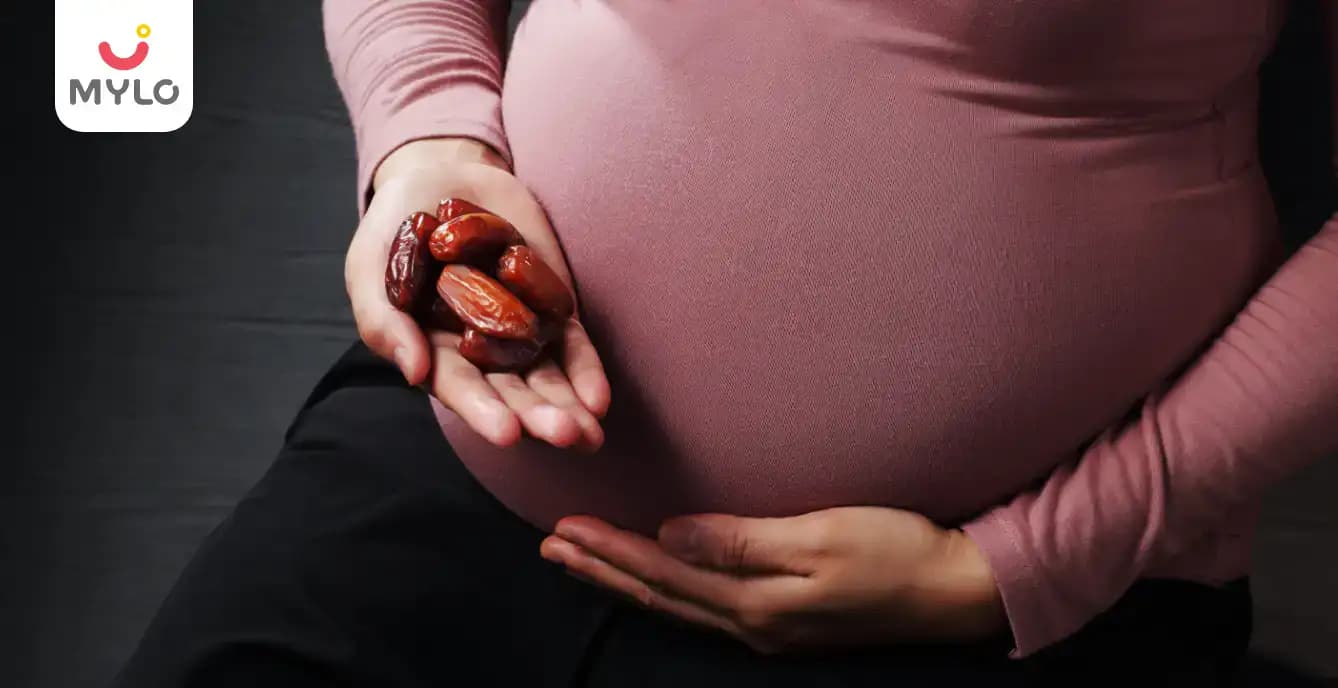
- Dates (khajoor) are safe throughout pregnancy and provide fibre, potassium, magnesium and some iron, making them a nutritious snack for expecting mothers.
- Research suggests eating about 6 dates daily in the last 4 weeks may help the cervix prepare for labour and reduce the need for induction.
- Dates are very high in natural sugar, so portion control is key, especially for women with gestational diabetes or rapid weight gain.
- What else supports your nutrition during pregnancy? Explore our MamaGro™ Protein Diskettes - High Protein & No Added Sugar - 250gm (50 Vanilla Diskettes).
 4.6
 4.7
 4.4
Quick Answer
Yes, dates are safe to eat throughout pregnancy. They give you fibre, potassium and some iron, and studies suggest that eating about 6 dates a day in the last 4 weeks may help the cervix get ready for labour. Dates are very high in natural sugar, so keep portions small and check with your doctor if you have gestational diabetes.
Khajoor is a favourite in Indian homes, from a quick snack to laddoos and milkshakes, and many women are told to eat dates in the ninth month for an easier delivery. Some of that advice is backed by research, and some is not. Here is what dates offer, what the labour studies really show, how many to eat, and when to be careful.
Can you eat dates during pregnancy?
Yes. Dates are a nutritious dried fruit and are not on the list of foods to avoid in pregnancy. They can be part of a healthy pregnancy diet, as long as you watch the portion size because of their sugar and calories.
Are dates safe in the first trimester?
Yes. There is no evidence that dates are harmful at any stage of pregnancy, including the first trimester. The belief that dates are "garam" and can cause miscarriage has no scientific basis. If morning sickness makes meals hard, one or two dates can be an easy source of quick energy.
What is in dates?
According to the Indian Food Composition Tables 2017, 100 g of dry dates (pale brown) contains:
Nutrient | Per 100 g |
|---|---|
Energy | About 320 kcal |
Carbohydrates (mostly natural sugar) | About 75 g |
Dietary fibre | About 9 g |
Potassium | About 804 mg |
Magnesium | About 74 mg |
Calcium | About 71 mg |
Iron | About 3.2 mg |
Folate (natural) | About 19 mcg |
Protein | About 2.5 g |
Two things stand out. Dates are rich in fibre, potassium and magnesium. But they are also very concentrated in sugar and calories, so a few dates go a long way.
Benefits of dates in pregnancy
Fibre for constipation: with about 9 g of fibre per 100 g, dates can help keep you regular. Constipation is common in pregnancy, especially if you take iron tablets, and the NHS advises more fibre and fluids to help.
Potassium and magnesium: dates are one of the richest natural sources of potassium, which your body needs for fluid balance and muscle function.
Some iron: about 3.2 mg per 100 g. This helps, but dates alone will not fix anaemia, which affects 52.2% of pregnant women in India. Eat them with vitamin C rich foods, like amla or oranges, and take the iron your doctor prescribes.
Quick energy: a couple of dates make a handy snack on tired days, and a better choice than biscuits, mithai or chocolate.
A natural sweetener: chopped dates or date paste can replace some sugar in milk, kheer or laddoos.
Can dates help with labour?
This is the reason many women eat dates in the last month, and there is some evidence behind it.
In a study of 114 women, those who ate 6 dates a day for 4 weeks before their due date arrived at hospital more dilated, more often went into labour on their own (96% vs 79%), and needed medicines to induce or speed up labour less often (28% vs 47%).
A 2020 review of 8 trials found that eating dates shortened the active phase of labour and improved cervical readiness, but did not change the overall length of labour or the C-section rate.
A larger 2024 review of 48 studies found that dates in late pregnancy were linked to shorter labour, less need for induction and more spontaneous vaginal births. But the authors rated the overall quality of the evidence as poor and said better studies are needed before dates can be recommended as care.
So, eating dates in the last few weeks is low risk and may help, but it is not a proven way to start labour. Talk to your doctor before relying on any food to help with labour, and ask about safe options if you go past your due date. Our guide on foods that may help you go into labour covers other popular remedies.
Risks of dates in pregnancy
Blood sugar: dates are very high in natural sugar. If you have gestational diabetes, ask your doctor or dietitian whether dates fit your meal plan, and if so how many. Eating them with a few nuts or a glass of milk can help.
Weight gain: at about 320 kcal per 100 g, dates add calories quickly, especially in laddoos, shakes and desserts.
Gas or loose motions: eating many dates at once can upset your stomach.
Allergy: rare. Stop eating them if you notice itching or swelling around the lips or tongue, and get medical help if you have trouble breathing.
Hygiene: loose dates from open bins can collect dust and insects. Buy packed dates or wash loose dates before eating, and check them for mould.
How many dates can you eat in pregnancy?
There is no official limit. For most women:
First and second trimester: 2 to 3 dates a day as a snack is a sensible amount.
From 36 weeks: the labour studies used 6 dates a day. If you want to try this, check with your doctor first, especially if you have gestational diabetes or are gaining weight quickly.
Trimester | Are dates okay? | Tip |
|---|---|---|
First (weeks 1 to 13) | Yes | 1 to 2 dates can help on low-energy, nausea days |
Second (weeks 14 to 27) | Yes | 2 to 3 a day as a snack, with nuts or milk |
Third (weeks 28 to 40) | Yes | Ask your doctor about 6 a day from 36 weeks |
Best ways to eat dates in pregnancy
2 or 3 dates with a handful of almonds or walnuts
Chopped dates in oats, porridge or curd
A dates and milk shake without added sugar
Dates and nut laddoos with no added sugar or jaggery, in small portions
Dates myths vs facts
Myth | Fact |
|---|---|
Dates are "garam" and cause miscarriage | There is no scientific evidence for this |
Dates will start labour | They may help the cervix get ready, but they do not reliably start labour |
Dates are low in sugar | They are very high in natural sugar, about 75 g of carbs per 100 g |
Eating dates cures anaemia | They contain some iron, but anaemia needs your doctor's treatment |
When should you see a doctor?
Contact your doctor if you have:
high sugar readings after eating dates, if you have gestational diabetes
passed your due date, to talk about safe options for labour
signs of labour before 37 weeks, such as regular tightenings, a gush of fluid or bleeding
itching, swelling of the lips or tongue, or trouble breathing after eating dates
Frequently Asked Questions
1. Can I eat dates in the first month of pregnancy? Yes. Dates are safe in early pregnancy. There is no evidence that they cause miscarriage.
2. How many dates should I eat a day during pregnancy? 2 to 3 a day is a sensible amount for most women. The labour studies used 6 a day from about 36 weeks. Check with your doctor before eating that many.
3. When should I start eating dates for labour? The studies started at about 36 weeks, in the last 4 weeks before the due date. Talk to your doctor before starting.
4. Do dates really help with normal delivery? Studies suggest they may help the cervix get ready and shorten part of labour, but the evidence is not strong, and they did not reduce C-section rates in the 2020 review.
5. Can I eat dates if I have gestational diabetes? Possibly, in very small amounts. Ask your doctor or dietitian, as dates are high in sugar.
6. Are dates good for anaemia in pregnancy? They contain some iron, about 3.2 mg per 100 g, but they are not a treatment for anaemia. Take the iron your doctor prescribes.
7. Can I eat dates with milk in pregnancy? Yes. Dates soaked in or blended with milk are a nutritious snack. Avoid adding extra sugar.
Related Articles
References
Longvah T, Ananthan R, Bhaskarachary K, Venkaiah K. Indian Food Composition Tables 2017. National Institute of Nutrition, ICMR. https://www.nin.res.in/ebooks/IFCT2017.pdf
Al-Kuran O, Al-Mehaisen L, Bawadi H, Beitawi S, Amarin Z. The effect of late pregnancy consumption of date fruit on labour and delivery. Journal of Obstetrics and Gynaecology, 2011. https://pubmed.ncbi.nlm.nih.gov/21280989/
Bagherzadeh Karimi A, Elmi A, Mirghafourvand M, Baghervand Navid R. Effects of date fruit (Phoenix dactylifera L.) on labor and delivery outcomes: a systematic review and meta-analysis. BMC Pregnancy and Childbirth, 2020. https://pubmed.ncbi.nlm.nih.gov/32290818/
Salajegheh Z, Nasiri M, Imanipour M, et al. Is oral consumption of dates in the peripartum period effective and safe integrative care to facilitate childbirth and improve perinatal outcomes? A systematic review and dose-response meta-analysis. BMC Pregnancy and Childbirth, 2024. https://pubmed.ncbi.nlm.nih.gov/38166785/
Press Information Bureau, Government of India. NFHS-5 findings on anaemia. https://pib.gov.in/PressReleasePage.aspx?PRID=1795421
NHS. Constipation. https://www.nhs.uk/conditions/constipation/
Medical disclaimer: This article is for general information only and is not a substitute for advice from your doctor. Please talk to your doctor or dietitian about your diet in pregnancy, especially if you have gestational diabetes.
Trusted by mamas nurturing a healthy pregnancy
Alongside wholesome foods like dates, the right prenatal care can help you feel energised and well-nourished through every trimester.
MamaGro™ Protein Diskettes - 250gm - Vanilla
Supports Healthy Placenta | Supports Fetal Development



Pregnancy Massage Oil + Coconut Oil - 200 ml each



Organic Aloe Vera (300 ml)
Nurtures Skin & Hair | Reduces Suntan | Soothes Burns | Enhances Hair Resilience



Article Posted Under
Related Articles
Medical Disclaimer
This content is for informational purposes only and should not replace professional medical advice. Consult with a physician or other health care professional if you have any concerns or questions about your health. If you rely on the information provided here, you do so solely at your own risk.


AWARDS AND RECOGNITION

Mylo wins Forbes D2C Disruptor award

Mylo wins The Economic Times Promising Brands 2022
AS SEEN IN













- Mylo Care: Effective and science-backed personal care and wellness solutions for a joyful you.
- Mylo Baby: Science-backed, gentle and effective personal care & hygiene range for your little one.
- Mylo Community: Trusted and empathetic community of 10mn+ parents and experts.


Product Categories
Baby Carrier | Baby Soap | Stretch Marks Cream | Baby Cream | Baby Shampoo | Baby Massage Oil | Baby Hair Oil | Stretch Marks Oil | Baby Body Wash | Baby Powder | Baby Lotion | Diaper Rash Cream | Teether | Baby Kajal |